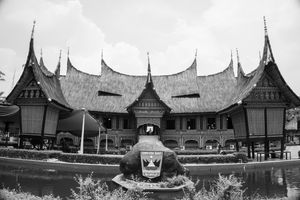

Nias culture is a rare example of a living megalithic society where ancient stone-working and warrior rituals continue to define local identity. Located off the western coast of Sumatra, this island hosts architectural wonders and athletic feats that have survived for centuries. The humidity clings to the dark wood of the great houses in the village of Bawomataluo. High on a hill, the sun glints off the surface of a massive stone slab, smoothed by generations of sitting elders. A young man stands at the edge of a paved courtyard, his muscles tensed for a leap that will transform him from a boy into a man.
The Megalithic Foundations of Nias Culture
The history of the Ono Niha, the people of Nias, is etched into the very rock upon which their villages are built. Unlike many other cultures in the Indonesian archipelago that moved toward lighter materials or transitioned fully into the Bronze Age, the people of Nias maintained a profound connection to stone. For thousands of years, the construction of megaliths served as the primary method for validating social status and honoring the spirits of the deceased. These stones are not mere relics: they are functional elements of a complex social hierarchy that dictates every aspect of village life.
In the southern regions of the island, particularly in the district of Teluk Dalam, the villages are arranged in a precise, cruciform layout. The ground is entirely paved with hand-hewn river stones, creating a durable stage for the rituals of the community. In the center of these plazas stand the darodaro, massive stone slabs that serve as seats for the nobility. Some are horizontal, intended for the living, while others are vertical monuments called gowe, erected to commemorate the achievements of a chief or to house the spirit of an ancestor. The effort required to move these stones, some weighing several tons, involved hundreds of men using wooden rollers and vines, a process that reinforced communal bonds through shared labor.

Omo Sebua: Engineering the Great Houses
Rising above the stone plazas are the Omo Sebua, or chief's houses, which represent the pinnacle of Nias architectural ingenuity. These structures are built entirely without nails, using a sophisticated system of mortise and tenon joints that allow the building to flex during the frequent earthquakes that strike the region. The houses rest on a forest of massive vertical pillars, which are themselves supported by diagonal cross-bracing. This design creates a structure that is both incredibly strong and remarkably resilient. In many cases, the Omo Sebua are the only buildings to remain standing after a major seismic event.
The interior of a chief's house is a gallery of Nias craftsmanship. The walls are adorned with intricate relief carvings of monkeys, lizards, and hornbills, each carrying a specific symbolic meaning. A frequent motif is the ship, representing the journey of the soul and the arrival of the ancestors. The height of the house is a direct reflection of the chief's power: the higher the floor, the closer the leader is to the upper world of the deities. The ventilation is equally clever, with slatted windows that catch the sea breeze while providing a vantage point to observe the village below without being seen.
Fahombo: The Physics and Spirit of the Stone Jump
Perhaps the most famous aspect of Nias culture is the Fahombo, the tradition of stone jumping. Historically, this was a rite of passage for young men to prove their readiness for warfare. In an era when villages were frequently at odds, defensive walls were often topped with sharpened bamboo stakes. To infiltrate an enemy village, a warrior needed the ability to clear these obstacles in a single bound. Today, while the inter-village conflicts have long since ceased, the Fahombo remains a vital symbol of masculine strength and cultural pride.
The stone jumping tower, known as the hombo batu, typically stands about two meters high and is half a meter thick. At the base of the tower is a smaller take-off stone that the jumper uses to gain elevation. The technique is precise and dangerous. A jumper must approach the tower at a full sprint, plant one foot firmly on the take-off stone, and propel himself upward in a tuck position. The most critical part of the ritual is the landing: the jumper must land cleanly on his feet on the stone pavement. A stumble or a fall is considered a mark of failure and a blow to the family's honor.
- The Preparation: The jumper begins with a period of physical training and mental focus, often overseen by an elder who has mastered the technique.
- The Approach: A high-speed run toward the stone tower to generate maximum momentum.
- The Launch: A powerful thrust off the take-off stone, lifting the knees toward the chest.
- The Clearance: Arching the body over the top of the tower, often clearing it by only a few centimeters.
- The Landing: A controlled descent onto the stone courtyard, requiring strong ankles and perfect balance.

Fataele: The Choreography of Ancient Warfare
The Fataele, or war dance, provides a sensory window into the island's martial past. When the drums begin to beat, a group of men emerges from the Omo Sebua dressed in striking costumes of red, black, and yellow. They carry heavy wooden shields (baluse) and long spears, their heads topped with helmets adorned with bird-of-paradise feathers or metal ornaments. The dance is not merely a performance: it is a stylized reenactment of the tactics used in ancient combat, characterized by sudden lunges, defensive retreats, and rhythmic chanting.
The movements are accompanied by the clashing of shields and the resonant sound of the gamba-gamba, a traditional wooden percussion instrument. The dancers move in tight formations, mimicking the phalanx-like strategies used to defend the narrow village entrances. Their faces are set in expressions of fierce concentration, and their shouts are intended to intimidate the invisible enemy. This ritual serves to maintain the warrior spirit of the community and ensures that the stories of ancestral bravery are passed down to the younger generation through physical memory.
The Silent Language of the Darodaro Stones
To understand Nias culture, one must look closely at the various types of megaliths found throughout the villages. These stones are not randomly placed: they form a map of the social order. The darodaro are the most common, serving as seats for the elders during customary meetings known as ora hu. Each seat is carved from a single block of stone, often featuring a circular or rectangular top supported by four or more legs. The size and ornamentation of the darodaro indicate the rank of the person entitled to sit upon it.
| Social Class | Role and Responsibility |
|---|---|
| Si’ulu | The noble class and traditional leaders who govern the village and organize festivals. |
| Si’ila | The intellectual class who serve as advisors, orators, and keepers of customary law. |
| Sato | The commoners who comprise the majority of the population, including farmers and craftsmen. |
Beyond the seats, there are the naitaro, which are vertical stone pillars used to tether sacrificial animals during the Owasa festivals. These festivals are grand events where a leader distributes wealth, usually in the form of pork, to the entire community to consolidate his status. The number of stones a man has commissioned during his lifetime is a permanent record of his generosity and power. Even in death, the stones continue to speak: the tombs of the nobility are often massive, multi-tiered structures that dominate the village landscape, ensuring that the legacy of the deceased remains a physical presence in the lives of the living.

Preserving the Spirit of the Ono Niha
In the modern era, Nias culture faces the challenge of maintaining its traditions in a rapidly changing world. The conversion of much of the population to Christianity in the late 19th and early 20th centuries brought significant changes to local customs, yet the core elements of the megalithic tradition proved remarkably resilient. Today, the village of Bawomataluo is recognized as a national heritage site, and efforts are underway to have it listed as a UNESCO World Heritage site. This recognition provides a framework for the physical preservation of the Omo Sebua and the ancient stone monuments.
The transmission of skills is the most critical aspect of this preservation. In the village workshops, master carvers continue to teach the next generation how to shape the hard basalt and limestone into the forms of their ancestors. Young boys still practice their leaps over smaller wooden replicas of the hombo batu, dreaming of the day they will clear the great stone tower in front of the village elders. The oral traditions, the Hoho, are still chanted during major ceremonies, preserving the genealogical records and the myths of the island's creation. As long as these practices continue, the stones of Nias will never be mere silent monuments: they will remain the foundation of a vibrant and living culture.
People Also Ask
What is the origin of the Nias stone jumping ritual?
The ritual, known as Fahombo, originated as a form of military training. Warriors needed to jump over stone walls or bamboo barricades to attack enemy villages. Over time, it evolved into a rite of passage for young men to prove their maturity and bravery.
How high is the stone jumping tower?
The typical stone tower, or hombo batu, is approximately two meters (6.5 feet) high and about 0.5 meters thick. The height can vary slightly between villages, but it is always designed to be a significant challenge for the jumper.
What do the carvings on Nias megaliths represent?
The carvings often depict ancestral spirits, animals like monkeys and lizards, and symbols of status like the hornbill. These motifs are intended to protect the community, honor the dead, and display the wealth and rank of the person who commissioned the stone.
Is the Nias war dance still performed today?
Yes, the Fataele war dance is still performed during major cultural festivals, wedding ceremonies, and to welcome important guests. It remains a vital part of the island's cultural identity and a way to maintain the traditional warrior spirit.
Why are Nias traditional houses built on stilts?
The houses are built on stilts primarily for earthquake resistance. The flexible wooden structure can sway without collapsing during seismic activity. The elevation also provides protection from floods and animals while allowing for better ventilation in the tropical climate.
What materials are used in Nias traditional costumes?
Traditional costumes are primarily made from cotton and plant fibers, decorated with intricate embroidery in red, yellow, and black. Warriors often wear helmets made of wood or metal and carry shields carved from light but durable wood. Gold jewelry is also a significant component for the nobility.