
Pinisi boat building history is a testament to the enduring maritime spirit of the Konjo, Bugis, and Makassar people of South Sulawesi. For over four centuries, these master shipwrights have constructed massive wooden schooners that once carried spices across the archipelago and now serve as icons of Indonesian heritage. In 2017, UNESCO inscribed this craft on the Representative List of the Intangible Cultural Heritage of Humanity, recognizing that the knowledge held by these builders is as vital as the vessels themselves. On the shores of Bulukumba, the air stays thick with the scent of sawdust and tropical resin, marking a place where the modern world yields to the rhythmic pulse of the mallet.
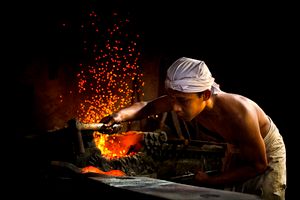
The sound of construction begins before sunrise. It is a percussive symphony of iron hitting wood, yet there is no conductor and no sheet music. In the shipyards of Tanah Beru and Ara, the builders do not use blueprints. They do not use power tools for the most critical joins. Instead, they rely on a collective memory passed down through oral tradition, where every measurement is calculated by the eye and every curve is dictated by the natural grain of the timber. This is not merely a manufacturing process; it is a spiritual undertaking that bridges the gap between the terrestrial forest and the celestial sea.

The Ancient Lineage of the Konjo Shipwrights
To understand the depths of Pinisi boat building history, one must look to the Konjo people of the Ara and Bira villages. While the Bugis and Makassar are the famed navigators and merchants who sailed these ships to Madagascar and Northern Australia, the Konjo are the architects. They are the ones who possess the 'secret' of the hull. This division of labor has existed for centuries, creating a symbiotic relationship between those who build and those who sail. The evolution of the Pinisi itself is a story of adaptation. The name refers not to the hull, but to the rigging system: a ketch or schooner arrangement featuring seven to eight sails.
Historical records suggest that the early predecessors of these ships, such as the patorani and padewakang, were used for fishing and local trade. It was only in the 19th century that the design began to incorporate European influences, specifically the fore-and-aft rig of Western schooners. This hybridity allowed the vessels to sail closer to the wind, making them the preferred choice for the lucrative spice trade. Despite these foreign influences on the rigging, the core construction techniques remained purely indigenous. The builders refused to adopt the Western practice of building a frame first and then attaching planks. Instead, they continued their ancient method of building the hull plank-by-plank, creating a shell that is incredibly resilient to the pressures of the open ocean.
Today, the shipyards of Bulukumba remain the primary site for this craft. Walking through Tanah Beru, one sees dozens of skeletons in various stages of completion. Some are small fishing boats, while others are massive luxury liveaboards destined for the waters of Raja Ampat or Komodo. Regardless of the size, the fundamental principles remain the same. The knowledge is held by the Panrita Lopi, the master builder, who serves as both an engineer and a spiritual guide for the project. He oversees a team of workers, often relatives, ensuring that the legacy remains within the community.
Construction Without Blueprints: The Mind of the Panrita Lopi
The most striking aspect of Pinisi boat building history is the absence of physical plans. There are no CAD drawings, no weathered parchments, and no architectural scales. The Panrita Lopi holds the entire design in his mind, adjusted for the specific needs of the client and the characteristics of the wood available. He uses his own body as a measuring tool, employing spans of his hand and the length of his foot to determine the proportions of the keel and the curvature of the ribs. This intuitive engineering is based on a deep understanding of physics and fluid dynamics, learned through decades of observation and apprenticeship.
The process begins with the selection of the wood. Traditionally, builders used four primary types of timber, each chosen for its specific density and resistance to rot. The most important is Bitti (Vitex cofassus), a hardwood that is naturally curved, making it ideal for the ribs of the ship. Ironwood (Eusideroxylon zwageri), or Ulin, is imported from the forests of Kalimantan for the hull planks and the keel because of its legendary strength and ability to harden when submerged in water. The table below outlines the primary materials used in traditional construction:
| Wood Type | Local Name | Purpose in Construction |
|---|---|---|
| Vitex cofassus | Bitti | Framing, ribs, and curved supports |
| Eusideroxylon zwageri | Ulin (Ironwood) | Keel, hull planks, and structural backbone |
| Tectona grandis | Jati (Teak) | Decking, interior cabins, and decorative elements |
| Artocarpus elasticus | Bendo | Masts and spars due to its flexibility |
Once the materials are gathered, the construction follows a strict sequence. Unlike Western shipbuilding, where the frame is built first, the Konjo builders start with the keel and then build up the hull planks. These planks are joined together using thousands of wooden dowels made from ironwood. The fit is so precise that the hull becomes a single, watertight unit even before any caulking is applied. This method, known as 'edge-joining,' allows the ship to flex and absorb the impact of heavy waves without cracking, a quality that has allowed Pinisi vessels to survive the most treacherous storms of the Indonesian seas.

Rituals of Blood and Spirit: The Soul of the Ship
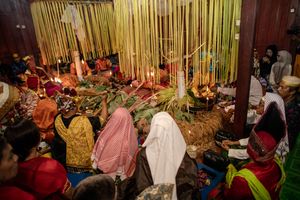
In Bulukumba, a ship is not considered a piece of property; it is a living entity with a soul. Consequently, Pinisi boat building history is inextricably linked to the 'Attunu' and 'Annyorong Lopi' rituals. These ceremonies are performed at every major stage of construction to ensure the safety of the crew and the longevity of the vessel. The most critical moment is the laying of the keel, or 'Sambung.' Before the first two pieces of the keel are joined, a ceremony is held to invite the spirits of the sea and the forest to bless the union. A goat or chicken is sacrificed, and its blood is smeared on the wood to symbolize the life force that will inhabit the ship.
During this ceremony, the Panrita Lopi recites prayers that blend Islamic traditions with ancient animistic beliefs. He places offerings of traditional cakes, incense, and gold or silver coins into the joints of the keel. These items are believed to protect the ship from 'evil eyes' and ensure prosperity for the owner. There is a profound sense of responsibility in these moments. The builder is not just making a boat; he is responsible for the lives of the men who will eventually sail it. If a mistake is made in the ritual, it is believed that the ship will be plagued by bad luck, or worse, 'thirst' for the blood of its crew.
Another significant ritual is the 'Kallong,' which occurs when the hull is completed and the masts are about to be stepped. However, the most spectacular event is the 'Annyorong Lopi,' or the launching of the ship. This is a communal effort that involves hundreds of people from the village. Since many of these ships are built on the sand, far from the water's edge at low tide, they must be physically hauled into the sea. Using rollers made of logs and massive ropes, the community pulls the vessel in a coordinated effort, accompanied by chanting and drums. The sight of a hundred-ton wooden ship sliding into the surf is a powerful reminder of the collective strength of the Bulukumba people.
Engineering the Seven Sails
The defining characteristic of the Pinisi is its rigging. The seven sails are said to represent the seven seas of the world, though they also serve a practical purpose in navigating the complex wind patterns of the Indonesian archipelago. The two main masts are tall and raked, supporting large gaff-rigged sails, while the bowsprit carries three or four triangular jibs. This configuration allows the vessel to be handled by a relatively small crew compared to the square-rigged ships of the colonial era. The sails were traditionally made of heavy canvas or woven palm fibers, though modern Pinisi often use high-grade synthetic materials for durability.
The transition from sail to motor began in the 1970s. As the demand for faster transport grew, many traditional cargo Pinisi were fitted with inboard diesel engines. This led to a change in the hull design, requiring a more substantial stern to support the weight and vibration of the machinery. Despite these mechanical additions, the builders in Bulukumba insisted on maintaining the traditional sail plan. Even today, a modern Pinisi is expected to be able to sail under wind power alone if necessary. This redundancy is a hallmark of the ship's design, ensuring that it remains a true 'Architect of the Wind' even in the age of fossil fuels.

From Spice Trade to Global Tourism: The Evolving Legacy
The functional role of the Pinisi has shifted dramatically over the last century. In the early 1900s, these ships were the workhorses of the Dutch East Indies, transporting timber, rice, and spices between the islands. They were the backbone of the 'inter-island trade' (Pelayaran Rakyat), a sector that remained largely in the hands of indigenous entrepreneurs even during the height of colonial rule. After Indonesian independence, the Pinisi continued to play a vital role in the national economy, carrying cement and construction materials to remote provinces where large container ships could not dock.
In recent decades, a new chapter in Pinisi boat building history has emerged: the luxury tourism industry. The world has rediscovered the romantic allure of the wooden schooner. Today, some of the most expensive and exclusive cruise vessels in the world are built in the dusty shipyards of Bulukumba. These modern Pinisi feature air-conditioned cabins, gourmet kitchens, and state-of-the-art navigation systems, yet their hulls are still built using the same ancient techniques. This shift has provided a necessary economic boost to the region, ensuring that the younger generation of Konjo builders has a reason to stay and learn the craft of their ancestors.
However, the industry faces challenges. The primary concern is the availability of high-quality timber. Ironwood and Teak are becoming increasingly scarce and expensive due to deforestation and stricter environmental regulations. Builders are now forced to source wood from more distant islands or experiment with alternative species. Furthermore, the UNESCO status brings a responsibility to preserve the 'purity' of the craft, which can sometimes conflict with the demands of modern maritime safety regulations. Balancing the weight of tradition with the requirements of the 21st century is the current task of the Panrita Lopi.
As the sun sets over the Makassar Strait, the shipyards of Bulukumba do not go silent. There is always a final check of a joint, a lingering smell of incense from a late-day blessing, or the sound of a master builder explaining the curve of a rib to his son. The Pinisi is more than a boat; it is a vessel for the identity of a people who have refused to let the wind be forgotten. In every dowel and every plank, the history of a seafaring nation continues to be carved into reality.
People Also Ask
What is the significance of Pinisi boat building history?
Pinisi boat building history represents one of the world's last remaining traditions of large-scale wooden shipbuilding without blueprints. It reflects the sophisticated maritime knowledge of the South Sulawesi ethnic groups and was recognized by UNESCO in 2017 as a vital part of global cultural heritage.
Which ethnic groups are responsible for Pinisi construction?
The craft is a collaboration between the Konjo people, who are the master builders (Panrita Lopi) based in Bulukumba, and the Bugis and Makassar people, who historically operated the vessels for trade and navigation throughout the Indonesian archipelago and beyond.
What types of wood are used in a Pinisi?
The primary woods used are Ironwood (Ulin) for the keel and hull planks due to its extreme durability, and Bitti (Vitex cofassus) for the structural ribs and frames. Teak is often used for decking and interior finishes in modern luxury versions of the ships.
Why are no metal nails used in traditional Pinisi building?
Traditional Pinisi construction uses thousands of wooden dowels made from ironwood instead of metal nails. These dowels expand when wet, creating a tighter seal and allowing the hull to remain flexible. This flexibility prevents the ship from cracking under the intense pressure of ocean waves.
What does the UNESCO recognition mean for Bulukumba?
The UNESCO status provides international recognition and protection for the craft. It encourages the Indonesian government to support the shipbuilders, manage sustainable timber sources, and ensure that the oral traditions and rituals associated with the building process are documented and passed to future generations.
How long does it take to build a traditional Pinisi?
A medium-sized Pinisi (around 20 to 30 meters) typically takes between 12 to 24 months to complete. The timeline depends on the availability of high-quality timber, the complexity of the design, and the timing of the necessary rituals and ceremonies that must be performed at specific stages.