The Sianok Canyon Bukittinggi is a massive tectonic rift located on the western edge of the city of Bukittinggi in the Minangkabau Highlands of West Sumatra. Travelers visit this geological wonder to experience its sheer vertical cliffs and the architectural achievement known as the Great Wall of Koto Gadang. The morning air in these highlands carries a sharp chill: it smells of woodsmoke and wet stone. As the sun rises over the twin peaks of Mount Singgalang and Mount Marapi, the valley floor remains in shadow, blanketed by a thick layer of white mist that clings to the Batang Sianok river.
This landscape is not merely a scenic vista but a living record of the Earth's movement. The canyon forms part of the Great Sumatran Fault, a fracture line that runs the entire length of the island. To stand at the edge of the cliff is to look down into a green abyss where the walls drop 100 to 120 meters straight toward the valley floor. The scale is humbling. For the Minangkabau people who live along its rim, the canyon is both a natural fortress and a sacred boundary.
The Geological Origins of Sianok Canyon Bukittinggi
The formation of the canyon is a story of violent movement and patient erosion. Millions of years of tectonic activity along the Semangko Fault created a rift in the earth, which was subsequently shaped by the Batang Sianok river. The walls are composed of volcanic tuff: a relatively soft rock formed from compacted volcanic ash. This material allows the water to carve deep, vertical grooves into the cliff sides, creating a jagged, organ-pipe appearance that catches the golden light of the late afternoon.
The canyon stretches for approximately 15 kilometers, though the most dramatic section lies within the vicinity of Bukittinggi. The width of the valley varies, sometimes narrowing to a tight gorge and other times opening into wide floodplains where farmers cultivate rice and seasonal vegetables. The contrast between the pale, sun-bleached cliffs and the vibrant emerald green of the tropical vegetation creates a visual intensity that is characteristic of the Sumatran highlands.
Observers can see how the vegetation fights for a foothold on these vertical surfaces. Creepers and ferns dangle from the cliff edges, their roots seeking out cracks in the volcanic tuff. Below, the river winds like a silver thread, its banks lined with bamboo thickets and giant ferns. The sound of the water is a constant presence, a low hum that rises from the depths of the rift and carries on the wind to the city above.

Walking the Janjang Koto Gadang: The Great Wall
To truly experience the verticality of the Sianok Canyon Bukittinggi, one must descend the Janjang Koto Gadang. This structure is often called the Great Wall of Koto Gadang because its stone and concrete walkways mirror the defensive architecture of the Great Wall of China. It was built to provide a pedestrian link between Bukittinggi and the village of Koto Gadang, replacing an older, more treacherous set of stairs known as the Janjang Saribu, or the Thousand Steps.
The trek begins at the mouth of the canyon. The path consists of hundreds of stairs that plunge down the cliff face. It is a physical test that rewards the traveler with shifting perspectives of the canyon walls. At certain points, the stairs are so steep that one must grip the handrails for balance. The air grows warmer and more humid as the descent progresses, moving from the breezy city heights into the sheltered microclimate of the valley floor.
About halfway through the journey, the path crosses a suspension bridge over the Batang Sianok. The bridge sways slightly underfoot, offering a direct view of the river's path through the gorge. From this vantage point, the scale of the cliffs above is most apparent. The walls rise like the ramparts of a cathedral, blocking out the horizon and leaving only a narrow strip of blue sky visible overhead. The journey across the bridge leads to the final ascent, a grueling climb up the opposite side of the canyon toward the plateau where Koto Gadang is situated.
The Silversmiths of Koto Gadang Village
Reaching the end of the Great Wall brings the traveler to the village of Koto Gadang. This settlement is famous throughout Indonesia for two things: its intellectuals and its silversmiths. For generations, the craftsmen here have specialized in silver filigree, a technique that involves twisting and soldering fine silver wires into intricate patterns. Unlike the solid silver work found in other parts of the country, Koto Gadang silver is delicate, resembling lace made of metal.
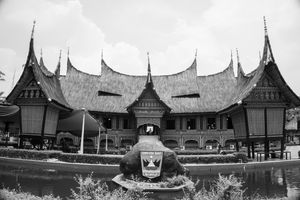
The village itself is a quiet place, characterized by traditional Minangkabau houses with their distinctive curved, horn-like roofs. These structures, known as Rumah Gadang, are decorated with colorful wood carvings that represent local flora and fauna. In the workshops, the sound of small hammers tapping against metal fills the air. The smiths work with meticulous patience, creating brooches, earrings, and miniature replicas of the Rumah Gadang houses.
Koto Gadang has a history of producing many of Indonesia's national heroes and diplomats. The villagers take great pride in their educational heritage. Walking through the narrow lanes, one sees a community that has maintained its traditions despite the proximity to the bustling markets of Bukittinggi. The relationship between the village and the canyon is one of interdependence: the canyon provided protection in the past, and today it provides the scenic beauty that draws visitors to their craft shops.

Wildlife and Flora of the Vertical Wilderness
The Sianok Canyon Bukittinggi serves as a sanctuary for various species of Sumatran wildlife. The most visible residents are the long-tailed macaques. These monkeys are frequently seen near the lookout points and along the stairs of the Great Wall. They are agile climbers, moving effortlessly across the sheer cliff faces to reach fruiting trees. While they are accustomed to humans, they remain wild animals and are known to be opportunistic scavengers.
In the quieter sections of the canyon, particularly near the river, the biodiversity is more subtle. The following table provides an overview of the common species and features encountered during a trek:
| Feature/Species | Description | Observation Tip |
|---|---|---|
| Long-tailed Macaque | Agile, grey-brown primates | Look for them on the railings near the start of the trail. |
| White-throated Kingfisher | Bright blue bird with a chocolate-brown head | Watch the riverbanks near the suspension bridge. |
| Giant Ferns | Prehistoric-looking plants with large fronds | Flourish in the damp, shaded areas of the valley floor. |
| Wild Ginger | Red and orange flowers with a spicy scent | Common along the forest edges of the trail. |
| Tropical Cicadas | Insects that create a loud, rhythmic buzzing | Listen for them in the late afternoon heat. |
Beyond the monkeys, the canyon is home to numerous bird species. The echo of the canyon walls amplifies their calls, creating an immersive acoustic experience. Large raptors can sometimes be seen soaring on the thermals generated by the heat reflecting off the limestone. The flora is equally diverse, ranging from mosses that coat the damp rocks to massive banyan trees whose aerial roots drape over the path like heavy curtains.
Practical Information for the Trek
Preparing for a visit to the Sianok Canyon Bukittinggi requires some basic planning. The weather in West Sumatra is notoriously unpredictable, with heavy afternoon rains being a common occurrence. The best time to start the trek is early in the morning, around 7:00 AM. This allows the traveler to avoid the midday heat and the highest probability of rain. The morning light is also superior for photography, as it illuminates the canyon walls without the harsh glare of the overhead sun.
Defining the Route: The Janjang Koto Gadang trek is a point-to-point hike. It begins at the Panorama Park (Taman Panorama) in Bukittinggi and ends in Koto Gadang village, or vice versa. The total distance is approximately 1.5 kilometers, but the steepness of the stairs makes it feel significantly longer. A moderate level of fitness is required.
- Entry Fees: There is a small entrance fee to Panorama Park, which grants access to the canyon overlooks and the Japanese Caves (Lobang Jepang).
- Footwear: Wear sturdy walking shoes with good grip. The concrete steps can become slippery when wet or covered in moss.
- Water: Carry at least one liter of water. There are few vendors once you descend into the canyon.
- Return Trip: After reaching Koto Gadang, travelers can take a local public transport van (angkot) back to Bukittinggi city center if they do not wish to hike back through the canyon.

The Cultural Significance of the Highlands
Bukittinggi is the cultural heart of the Minangkabau people, and the canyon is central to this identity. The Minangkabau are known for their matrilineal society, where property and names are passed down through the female line. This social structure is reflected in the way the land is managed around the canyon. Many of the rice paddies on the valley floor are communal family lands, tended to by generations of the same kin groups.
The city itself, perched on the edge of the rift, is a place of history. During the Dutch colonial era, it was known as Fort de Kock. The remnants of the old fort still stand on a hill overlooking the canyon. The landmark Jam Gadang, a large clock tower built in 1926, serves as the center of the city. The roof of the clock tower was originally a rooster, then changed to a Shinto shrine during the Japanese occupation, and finally transformed into the traditional Minangkabau horn-shaped roof after independence. This layer of history mirrors the geological layers seen in the canyon walls below.
Visiting the Sianok Canyon Bukittinggi is more than a physical exercise. it is an immersion into the intersections of geology, history, and culture. The descent into the canyon feels like a step back in time, away from the motorcycles and markets of the city into a space where the rhythm of the river and the wind takes precedence. It is a reminder of the power of the natural world to shape human settlement and tradition.
Conclusion
The Sianok Canyon Bukittinggi remains one of Sumatra's most evocative landscapes. From the sheer volcanic cliffs that define its borders to the intricate silver filigree of Koto Gadang, the region offers a profound look at the resilience of both nature and culture. Walking the Great Wall provides a rare opportunity to move through a tectonic rift on foot, experiencing the vertical wilderness that has defined the Minangkabau highlands for millennia. As the sun sets and the mist returns to the valley, the canyon settles into a deep silence, a quiet testament to the enduring power of the Sumatran earth.
People Also Ask
Is Sianok Canyon Bukittinggi safe for solo hikers?
Yes, the trail is well-defined and frequently used by locals and tourists. However, it is always advisable to hike during daylight hours and inform someone of your plans. The monkeys can be aggressive if they see food, so keep your belongings secure.
How many steps are in the Janjang Koto Gadang?
While there is no official count, it is estimated that there are over 1,000 steps across the entire length of the Great Wall. The descent and ascent are steep, requiring frequent breaks for those not accustomed to high-altitude hiking.
Can I visit the Japanese Caves and the Canyon on the same day?
Yes, the entrance to the Japanese Caves (Lobang Jepang) is located within Panorama Park, which also serves as one of the main viewpoints for the canyon. It is common to visit the caves before starting the trek down to Koto Gadang.
What is the best viewpoint for Sianok Canyon Bukittinggi?
Taman Panorama (Panorama Park) offers the most famous and accessible view. For a more secluded perspective, one can find smaller overlooks along the road toward Koto Gadang or from the various cafes situated on the canyon rim.
Do I need a guide for the Great Wall trek?
A guide is not strictly necessary as the path is a single, clear walkway. However, hiring a local guide can provide deeper insights into the history of the area and the specific plants and animals encountered along the way.
Are there restaurants inside the canyon?
There are no restaurants on the valley floor or along the Great Wall stairs. You will find small stalls selling snacks and drinks at the entrance in Bukittinggi and several small eateries once you reach the village of Koto Gadang.