
Tana Toraja death rituals are the central pillar of life for the Torajan people in the highlands of South Sulawesi, Indonesia. These elaborate ceremonies are not merely about saying goodbye but are essential for guiding the deceased into the afterlife. The scale of these rituals depends on the social status of the family, often involving the sacrifice of numerous water buffalo over several days of communal gathering. In the cool morning air of the Sa’dan valley, the sound of traditional gongs echoes against the limestone cliffs, marking the start of a journey toward the spirit world.
Death in Torajan culture is a slow transition rather than a sudden event. When a person passes away, they are not considered dead in the biological sense but are referred to as to makula, or a person who is sick. They remain in the family home, sometimes for months or even years, while the family saves money for the funeral. During this time, the deceased is offered food, water, and cigarettes daily. The body is treated with natural preservatives, and more recently with formalin, to ensure it stays intact until the final rites can be performed. This period of cohabitation reflects a deep-seated belief that the bond between the living and the dead is never truly severed.
The Cosmology of Aluk To Dolo
The foundation of these practices lies in Aluk To Dolo, which translates to the Way of the Ancestors. This ancient belief system dictates that the universe is divided into three realms: the upper world of the gods, the world of humans, and the underworld. Proper funeral rites are necessary to ensure that the soul, or bombo, can travel safely to Puya, the Land of Souls. If a funeral is not conducted according to the strict social and spiritual laws, the soul may linger and bring misfortune to the living relatives.
Social hierarchy, known as tana’, plays a decisive role in how these rituals are performed. The Torajan society is historically divided into three classes: the nobility, the commoners, and the lower class. The number of buffalo sacrificed and the duration of the ceremony are strictly governed by these ranks. A noble’s funeral might last seven days and require the sacrifice of twenty-four or more buffalo, while a commoner’s ceremony might only last three days with a few animals. This structure ensures that every member of society knows their place in the cosmic order, even in death.

The Sovereign Status of the Tedong Bonga
The water buffalo, or tedong, is the most critical element of the Tana Toraja death rituals. It is the vehicle that carries the soul to the afterlife. While standard grey buffalo are common, the most coveted animal is the Tedong Bonga, a rare piebald buffalo characterized by its white and black skin and frequently blue eyes. These animals are treated with exceptional care. They are not used for plowing fields; instead, they are groomed, hand-fed, and paraded as symbols of immense wealth and prestige.
The value of a buffalo is determined by its markings, horn span, and size. A single Tedong Bonga can cost as much as fifty thousand dollars, a sum that reflects the deep economic commitment Torajan families make to their ancestors. The sacrifice of these animals is seen as a redistribution of wealth, as the meat is shared among the community according to a strict protocol that honors local leaders and visiting relatives.
| Buffalo Type | Physical Characteristics | Symbolic Value |
|---|---|---|
| Tedong Bonga | Black and white patches, often with blue eyes | Extremely High; Reserved for nobility |
| Tedong Saleko | Primarily white or pinkish skin with small black spots | Highest Value; Symbol of ultimate prestige |
| Tedong Lidian | Long, symmetrical horns with grey skin | High; Valued for aesthetics and strength |
| Tedong Sambao | Light grey or muddy brown skin | Moderate; Common for smaller ceremonies |
| Tedong Pudu | Solid black skin, very strong build | Standard; The workhorse of sacrificial rites |
Rambu Solo: The Logic of the Sacrifice
The actual funeral ceremony is called Rambu Solo, which literally means "smoke descending." This refers to the time of day when the rituals begin, usually after noon as the sun starts its descent. The ceremony is a sensory experience of immense proportions. The air is filled with the scent of roasting meat and the sounds of the Ma’badong, a traditional circular dance where men chant the history of the deceased in a low, rhythmic drone.
The central event is the sacrifice of the buffalo. This is done in a designated ceremonial field called a rante. With a single, swift strike to the jugular, the animal is dispatched. This act is not viewed as cruelty by the Torajans but as a sacred duty. The blood must touch the earth to sanctify the ground and release the spirit of the animal to accompany the human soul. Following the sacrifice, the horns of the buffalo are collected and later mounted on the front of the family’s ancestral house as a permanent record of the funeral’s scale.

Architecture of the Afterlife: Tongkonan and Tau-Tau
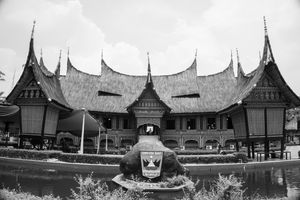
The cultural identity of Tana Toraja is physically manifested in the Tongkonan, the traditional boat-shaped houses with towering roofs that curve upward like the horns of a buffalo. These structures are more than just dwellings; they are the center of the kinship system. Each Tongkonan is oriented toward the north, the direction of the gods, and is covered in intricate carvings known as Passura. These carvings use four primary colors: black for death, red for life, yellow for power, and white for purity.
Equally important are the Tau-tau, life-sized wooden effigies carved to resemble the deceased. These figures are commissioned for high-ranking individuals and are meticulously crafted from jackfruit wood. Once completed, the Tau-tau are dressed in fine clothing and adorned with jewelry. They are placed on balconies carved into limestone cliffs, where they stand as silent guardians overlooking the rice fields and the living descendants. The presence of these figures ensures that the ancestors remain a visible part of the daily landscape.
The Silent Sentinels of the Limestone Cliffs
The final resting places in Tana Toraja are as diverse as the rituals themselves. Because the land is precious for agriculture, the dead are rarely buried in the ground. Instead, they are placed in stone graves carved into the sides of massive limestone karsts. At sites like Lemo and Suaya, the cliff faces are honeycombed with small wooden doors leading to family vaults.
In other areas, such as Londa, the dead are placed inside natural caves. These caves are filled with coffins in various states of decay, some hanging from the ceiling by thick ropes to keep them away from scavengers. These "hanging graves" are a testament to the belief that the higher a person is placed, the closer they are to the heavens. Visitors to these caves will find skulls and bones arranged neatly on ledges, often surrounded by offerings of cigarettes, plastic water bottles, and coins left by relatives who come to visit their ancestors.

The Economics of Tana Toraja Death Rituals
In the modern era, Tana Toraja death rituals have become a complex intersection of tradition and global economics. The cost of a funeral can place a significant financial burden on a family, often leading younger generations to work in cities like Makassar, Jakarta, or even overseas to send money back home. This economic drive has not diminished the tradition; rather, it has reinforced it. The ability to provide a grand funeral is a point of immense pride and a way to maintain social standing in a rapidly changing world.
There is also the practice of Ma’nene, which occurs every few years after the harvest. Families return to the tombs to remove the bodies of their ancestors, clean them, and dress them in new clothes. This ritual, often called the "cleaning of the corpses," is a celebration of life and a manifestation of the Torajan belief that death is not a separation. It is a time for the living to introduce new family members to their ancestors and to maintain the physical connection that defines their identity.
People Also Ask
Why do Torajans keep the dead in their houses?
Torajans believe that a person is not truly dead until the Rambu Solo funeral ceremony is completed. Until then, the deceased is considered "sick" or "sleeping." Keeping them at home allows the family time to mourn and, more importantly, time to save the significant funds required for the elaborate sacrificial rituals.
How much does a typical Torajan funeral cost?
A funeral for a noble family can cost between $50,000 and $200,000 or more. The bulk of this expense goes toward purchasing water buffalo, particularly the rare piebald varieties, and providing food and hospitality for hundreds or even thousands of guests who attend the multi-day event.
Is the buffalo sacrifice mandatory?
In the context of Aluk To Dolo, the sacrifice is essential for the soul's passage to Puya. While many Torajans have converted to Christianity, the cultural importance of the sacrifice remains. Even in Christian ceremonies, buffalo are slaughtered to honor tradition and to provide meat for the community, though the spiritual interpretation may vary.
What is the significance of the boat-shaped roofs?
The Tongkonan roofs are said to represent the boats that the original Torajan ancestors used to sail across the sea to Sulawesi. Others interpret the shape as representing the horns of a buffalo, symbolizing the animal's central role in their spiritual and social life.
Can tourists attend these funeral ceremonies?
Yes, Torajans are generally very welcoming to outsiders at their funerals. These are communal events, and the presence of guests is often seen as an honor to the family. Visitors are expected to dress respectfully in dark colors and often bring a small gift, such as a carton of cigarettes or sugar, as a token of respect for the grieving family.
What are the Tau-tau effigies made of?
Traditionally, Tau-tau are carved from the wood of the jackfruit tree, which is durable and takes on a skin-like tone over time. The quality of the carving and the materials used depend on the status of the deceased. Only the wealthy and noble are permitted to have these life-sized, detailed representations.