
The Toraja funeral ceremony is the most significant social and spiritual event in the lives of the Torajan people of South Sulawesi, Indonesia. Far from being a somber or private affair, these rites represent a grand transition that bridges the world of the living with the realm of the ancestors. For the Torajans, death is not a sudden departure but a slow, deliberate journey that requires years of preparation, immense communal effort, and the sacrifice of prized water buffalo to ensure the soul reaches Puya, the land of souls.
Deep within the rugged highlands where clouds frequently drape over the jagged limestone peaks, the rhythm of life is dictated by these ancient obligations. The air in Rantepao and the surrounding villages often carries the scent of roasting meat and clove cigarettes, sounds of rhythmic chanting, and the low, resonant thud of gongs. Here, the boundary between the physical and spiritual worlds is porous, and the dead continue to reside with their families long after their breath has ceased.
The Philosophy of Aluk To Dolo
To understand the magnitude of the Toraja funeral ceremony, one must first grasp the tenets of Aluk To Dolo, which translates to the Way of the Ancestors. This indigenous belief system governs every aspect of Torajan life, from agriculture and house construction to the complex social hierarchies that define the community. Even as many Torajans have converted to Christianity over the last century, the core rituals of Aluk To Dolo remain the cultural bedrock of the region, creating a unique syncretism where church bells and ancestral sacrifices coexist.
In this worldview, a person is not considered truly dead when their biological functions stop. Instead, they are referred to as To Makula', or a sick person. The deceased remains in the family home, sometimes for months or even years, while the family saves the exorbitant funds required for a proper funeral. During this time, the body is treated as if the person is sleeping. Family members bring them food, water, and cigarettes daily, speaking to them and ensuring they are never left alone. This period of cohabitation allows the family to process their grief slowly, transforming the shock of loss into a long-term preparation for a final goodbye.
This preservation was historically achieved using natural herbs and local minerals, though modern families often use formalin. The goal remains the same: to keep the loved one present until the community can gather to send them to the afterlife. The scale of the eventual ceremony depends entirely on the social status of the deceased, with the most elite members of society requiring celebrations that last for a week and involve the sacrifice of dozens of buffalo.

The Architecture of the Ancestors: The Tongkonan
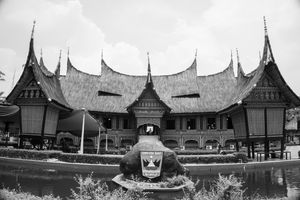
The physical center of Torajan culture is the Tongkonan, the traditional ancestral house. These structures are instantly recognizable by their massive, boat-shaped roofs that curve upward at both ends, reaching toward the sky. According to local lore, the shape represents the prows of the ships that brought the original ancestors to Sulawesi. The houses are always oriented toward the North, the direction of the life-giving headwaters and the realm of the creator, Puang Matua.
Every Tongkonan is more than just a dwelling; it is a living record of a family’s lineage. The front pillars are often adorned with the horns of water buffalo sacrificed at past family funerals. These horns serve as a public tally of the family’s wealth and their commitment to their ancestors. The walls are covered in intricate wood carvings known as Passura', painted in four symbolic colors: red for blood and life, black for death and darkness, yellow for God’s blessing, and white for purity.
The Symbolism of Passura' Carvings
The carvings are not merely decorative. Each pattern carries a specific meaning that reflects the values of the community. For example, the Pa'tedong (buffalo) motif represents prosperity and the hope that the family will have many buffalo in the future. The Pa'ssulan Sangbua (sun and clouds) represents the light of life and the majesty of the creator. These patterns are carved by hand into the wood of the Tongkonan, ensuring that the history of the clan is literally etched into the home that houses their living and their dead.
Rambo Solo: The Stages of the Toraja Funeral Ceremony
The Rambo Solo is the climax of Torajan cultural expression. This multi-day event draws hundreds or even thousands of guests from across the highlands and the Indonesian diaspora. It is a time of immense logistical complexity, requiring the construction of temporary bamboo pavilions to house guests and the coordination of vast quantities of food and ritual offerings.
One of the most striking aspects of the Toraja funeral ceremony is the sacrifice of the water buffalo, or tedong. Torajans believe that the buffalo is the vehicle for the soul, carrying the deceased across the mountains of the afterlife to Puya. Without the sacrifice of these animals, the soul may linger and cause trouble for the living. The value of a buffalo is determined by its color, the shape of its horns, and its size. The most prized is the Tedong Bonga, a rare piebald or albino buffalo with blue eyes, which can cost as much as a luxury vehicle.
| Buffalo Type | Characteristics | Symbolic Value |
|---|---|---|
| Tedong Bonga | Piebald (black and white), blue eyes | Highest status, essential for nobility |
| Tedong Saleko | White base with black spots | Extremely rare, represents great wealth |
| Tedong Lontong | Solid black | Standard sacrifice for commoners |
| Tedong Sambao | Grey or light-colored | Lower value, used for smaller rituals |
During the ceremony, the buffalo are led into a central plaza. In a display of precision and ritual, a specialist executioner severs the jugular vein with a single stroke of a razor-sharp machete. The meat is then meticulously divided among the guests according to their social rank and their relationship to the deceased. This distribution is a critical social mechanic, reinforcing bonds of debt and reciprocity that span generations.

The Sacred Caves of Londa
Once the Rambo Solo is complete, the deceased is finally moved to their resting place. In Tana Toraja, burial does not typically happen underground. Instead, the dead are placed in the limestone cliffs that define the landscape. Londa is perhaps the most famous of these sites, a massive natural cave system that has served as a tomb for centuries. Entering Londa is a sensory experience; the air is cool and damp, smelling of ancient dust and the faint sweetness of incense.
At the entrance of the cave, high on a wooden balcony carved into the cliff face, stand the Tau-tau. These are life-sized wooden effigies carved to resemble the deceased. They stare out over the valley with wide, fixed eyes, acting as guardians of the living and the dead. In the past, Tau-tau were only permitted for the highest-ranking members of society. Their clothing is changed periodically in rituals of remembrance, keeping the connection between the generations alive.
Inside the cave, the floor and walls are lined with erong, traditional wooden coffins. Some are shaped like boats, others like buffalo or pigs. Over time, the wood of the older coffins decays, spilling their contents onto the limestone ledges. It is common to see skulls and bones arranged neatly alongside modern offerings such as bottles of water, snacks, and packets of cigarettes. This sight is not considered macabre by Torajans; it is a natural part of the landscape, a physical manifestation of the ancestors who continue to watch over the land.
The Ma’nene Ritual: Caring for the Dead
Every few years, usually in August after the harvest, some communities in Toraja perform the Ma’nene ritual, also known as the Cleaning of the Corpses. Families return to the burial sites to remove the bodies of their loved ones from their coffins. They gently clean the remains, dry them in the sun, and dress them in fresh, new clothes. It is a time of joy and reunion. Grandchildren meet grandparents they never knew in life, and families take photographs with their ancestors. This practice reinforces the Torajan belief that death does not end a relationship; it merely changes the nature of the interaction.
The Art of the Carver and the Weaver
The rituals of Toraja would not be possible without the skilled artisans who produce the necessary ceremonial objects. Woodcarvers are held in high esteem, as their work on the Tongkonan and the Tau-tau preserves the visual identity of the culture. These craftsmen use traditional tools to etch precise geometric patterns into local hardwoods, often working for months on a single structure.
Textiles also play a vital role. The Kandiak and Seko-seko cloths, often featuring bold red and orange patterns, are used to wrap the bodies and decorate the ceremonial arenas. These fabrics are woven using back-strap looms, a labor-intensive process that can take weeks to complete. The patterns often mirror the carvings of the Tongkonan, creating a unified aesthetic language that links the home, the body, and the grave.

A Living Heritage in a Changing World
The Toraja funeral ceremony remains a powerful testament to the resilience of indigenous culture in the face of globalization. While the costs of these rituals have skyrocketed and many young Torajans move to cities like Makassar or Jakarta for work, the pull of the highlands remains irresistible. They return in droves during the funeral season, bringing modern wealth to support ancient traditions.
This devotion to the ancestors ensures that the mountains of South Sulawesi remain a place where the past is never truly gone. The sight of a soaring Tongkonan against a green rice paddy, the sound of a buffalo’s lowing, and the silent gaze of the Tau-tau at Londa all speak to a profound truth: that life is best understood when viewed through the lens of those who came before. In Tana Toraja, the dead are not departed; they are simply waiting in the cool shadows of the caves, honored and never forgotten.
People Also Ask
Why are funerals in Toraja so expensive?
The cost is driven primarily by the sacrifice of water buffalo. A single high-quality buffalo can cost tens of thousands of dollars. Additionally, the family must provide food and shelter for hundreds of guests over several days and pay for the construction of ceremonial structures and the carving of effigies.
How long can a body stay in the family home?
There is no set time limit. Depending on the family's ability to raise funds, a body may remain in the house for several months or even several years. During this period, the person is considered sick rather than dead.
Can visitors attend a Toraja funeral ceremony?
Yes, Torajans are generally very welcoming to visitors. However, it is essential to follow local etiquette, which includes dressing modestly, bringing a small gift (such as sugar or cigarettes) for the host family, and remaining respectful during the more solemn moments of the sacrifice.
What is the significance of the Tau-tau effigies?
Tau-tau serve as a physical representation of the deceased's spirit. They are placed on balconies near burial sites to watch over the village and protect the living. They are considered sacred objects and are deeply respected by the community.
Why are the dead buried in caves instead of the ground?
Burial in limestone caves or cliffs is a tradition rooted in Aluk To Dolo. It is believed that being placed high up or within the earth's natural structures keeps the body safe from animals and closer to the spirits of the ancestors. It also preserves the limited land available for rice cultivation.
What happens to the meat from the buffalo sacrifice?
None of the meat goes to waste. It is distributed among the funeral guests, neighbors, and community members according to a strict social hierarchy. This distribution is a way of sharing the family’s wealth and honoring the social contracts within the village.