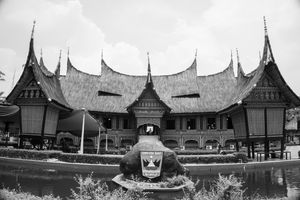

Forget the gleaming domes and soaring minarets that define the modern mosque skyline. To understand the soul of Indonesian Islam, you must travel back in time, to an era of wood, shadow, and synthesis. Step across the threshold of a 15th-century Javanese mosque, and the air changes. It grows cooler, scented with the faint, sweet perfume of ancient teak. Light doesn't flood, it filters, painting patterns on worn stone floors. This is not an architecture of grand pronouncements, but of quiet, profound conversation—a dialogue between a new faith and a deeply rooted local identity.
An Architecture of Accommodation
Islam arrived in the Indonesian archipelago not on the winds of conquest, but on the gentle currents of trade. Merchants, scholars, and Sufi mystics from Gujarat and Persia introduced their faith over centuries, allowing for a gradual process of cultural absorption. The legendary Wali Songo (Nine Saints), credited with spreading Islam across Java, were master cultural anthropologists themselves. They understood that to be accepted, the new faith had to resonate with existing beliefs, not erase them.
The result was a remarkable architectural syncretism. Instead of importing Middle Eastern blueprints, early Javanese builders adapted the forms they already knew. The foundational layout of the mosque's main prayer hall is often strikingly similar to the pre-Islamic pendopo, the open-sided pavilions of Javanese palaces and community halls designed for tropical climates. This wasn't appropriation; it was translation, rendering new sacred concepts in a familiar vernacular.
The Language of Timber and Tile
These early mosques speak a distinct architectural language, one deeply connected to the Austronesian and Hindu-Buddhist traditions that preceded it. Understanding its grammar reveals a story of cultural ingenuity.
The Tiered Roof (Atap Tumpang): The most defining feature is the multi-layered, pyramidal roof. This form is a direct descendant of the tiered meru roofs of Balinese and Javanese temples, which symbolize the sacred cosmic mountain. Instead of rejecting a pagan symbol, early builders reinterpreted it, with the layers often representing stages of the Sufi spiritual journey towards enlightenment.
The Four Pillars (Saka Guru): At the heart of the structure stand four colossal wooden pillars, the Saka Guru. These are the load-bearing core, holding up the towering roof. They are more than structural; they are the symbolic heartwood of the community. At the Great Mosque of Demak, legend holds that one pillar was miraculously assembled by the saint Sunan Kalijaga from wood shavings (tatal), a testament to the power of collective spirit.
Open Walls and Natural Light: Designed for the tropical heat, these mosques often feature semi-open walls or large verandas (serambi), allowing for constant air circulation. This creates a sense of continuity between the sacred inner space and the outside world, a departure from the enclosed courtyards of desert mosques.

The Journey: A Tale of Two Mosques
A trip through Central Java's northern coast is a pilgrimage into this architectural past. The cities of Demak and Kudus, a short drive from the provincial capital of Semarang, form the spiritual and historical epicenter of this tradition.
Masjid Agung Demak: The Archetype
Considered the cradle of Javanese Islam, the Great Mosque of Demak (est. circa 1479) is the quintessential example of this early style. Standing in its courtyard, your eyes are drawn to the three-tiered roof, crowned with a distinctive mustaka finial. The main prayer hall is a forest of timber, cool and dark. Your focus inevitably lands on the four massive Saka Guru pillars. Running your hand over the worn, polished teak, you feel the grain of history itself. The mosque is not a museum piece; it is a vibrant center of worship. The low hum of Quranic recitation often fills the air, and the scent of clove cigarettes drifts from the bustling surrounding market, the alun-alun.
Masjid Menara Kudus: The Great Synthesis
Less than an hour away lies Kudus, home to a mosque that displays the most audacious act of cultural blending. The Menara Kudus Mosque is famous for its minaret—or rather, what serves as one. The tower is, in fact, a 16th-century red-brick kulkul, a watchtower and drum tower styled identically to those found in Hindu temples of the Majapahit era. Sunan Kudus, one of the Wali Songo, is said to have incorporated it directly into his mosque's design to attract local Hindus to the new faith. It stands today as a powerful, undeniable monument to Indonesia's genius for synthesis. Here, Islamic calligraphy adorns walls next to Hindu-style split gates (candi bentar). It is a physical embodiment of peaceful coexistence.

Practical Guide for the Architectural Pilgrim
Visiting these sites is less a tourist activity and more a cultural immersion. They are active places of worship, and a respectful, well-prepared approach is essential.
Essential Itinerary
- Masjid Agung Demak & Masjid Menara Kudus: These two are the cornerstones. They are best visited from Semarang, Central Java's main transport hub. You can typically hire a car with a driver for a day trip covering both sites. The journey between them is roughly 1-1.5 hours, depending on traffic.
- Masjid Sendang Duwur: For those with more time, this mosque near Tuban in East Java sits on a hilltop and is renowned for its fantastically intricate woodcarvings, which blend Islamic and local motifs in a style unlike any other.
What to Expect & Etiquette
- Atmosphere: These are living heritage sites, not sterile monuments. Expect to see people praying, studying, or simply resting in the shade. The atmosphere is generally calm and welcoming.
- Dress Code: Modesty is paramount. Both men and women should ensure their shoulders and knees are covered. Women are advised to carry a light scarf to cover their hair upon entering the main prayer hall. Major mosques often provide robes or sarongs for visitors, sometimes for a small donation.
- Conduct: Speak in low tones. Do not walk in front of people who are praying. Photography is usually permitted in the courtyards and outer areas, but be discreet and always ask for permission before taking photos of individuals.
Logistics and Safety
- Best Time to Visit: The dry season, roughly from April to October, offers the most pleasant weather for travel. Visiting outside of major Islamic holidays like Eid al-Fitr (Lebaran) will mean fewer crowds. However, visiting during the month of Ramadan can offer a unique glimpse into community life, especially around the time of breaking the fast.
- Getting Around: While inter-city buses are available, the most efficient way to see these often rurally-located sites is by hiring a private car and driver from a larger city like Semarang or Surabaya. This offers flexibility and helps navigate local roads.
- Disclaimer: Information regarding opening hours, entrance fees (which are often donation-based), and local road conditions can change. Always verify information locally. Be prepared for humid conditions and stay hydrated.

Whispers in the Wood
To visit these early mosques is to read a story carved in wood and laid in stone. They are a powerful reminder that culture is not a zero-sum game, and that the arrival of a new idea does not have to mean the death of an old one. In their quiet, shaded halls, under the weight of their magnificent tiered roofs, you can still hear the whispers of a centuries-old conversation—a dialogue that continues to shape the tolerant, syncretic, and utterly unique character of Indonesia today.