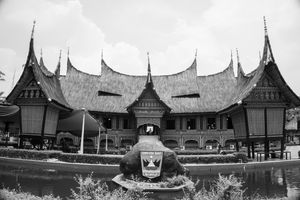

The Sultanate of Siak history reflects a period of immense wealth and political influence that shaped the Riau region of Sumatra for over two centuries. Established in 1723, this sovereign Malay state became a pivotal center for trade, Islamic scholarship, and resistance against colonial encroachment. Sunlight stretches across the polished marble floors of the Asserayah El Hasyimiyah Palace, illuminating a space where European elegance meets the refined aesthetics of the Malay world. The air inside the palace remains cool, carrying the faint scent of old timber and the heavy silence of a kingdom that chose to dissolve itself for the sake of a new nation.
Defining the Realm
To understand the significance of this region, one must first define the terms that describe its identity. The name "Siak Sri Indrapura" carries deep etymological weight.
Sri Indrapura: This Sanskrit-derived name translates to "The Radiant City of the Sun God" or "The City of Indra." It was chosen to signify the divine light and authority of the ruling monarch.
The Siak River: Known as the deepest river in Indonesia, this waterway served as the kingdom's primary artery, allowing large merchant vessels from Europe, China, and the Arabian Peninsula to sail deep into the Sumatran interior.
The Sultanate of Siak history and the Legend of Raja Kecil
The origins of the Sultanate of Siak history are rooted in a 18th-century struggle for the Johor throne. Raja Kecil, who claimed to be the posthumous son of Sultan Mahmud Syah II of Johor, founded the kingdom after a series of naval battles and political maneuvers. He eventually moved his capital to the banks of the Siak River, recognizing the strategic advantage of the deep water and the surrounding natural resources. This move established a new dynasty that would eventually eclipse its predecessors in maritime commerce.
Life in the early sultanate revolved around the rhythm of the river. The Siak waterway was not merely a boundary; it was a highway for pepper, timber, and gold. Merchants from the Dutch East India Company often found themselves negotiating with the Siak sultans, who proved to be shrewd diplomats. The kingdom maintained its independence through a delicate balance of trade concessions and military readiness, ensuring that the Riau-Malay culture flourished even as colonial powers tightened their grip on the surrounding archipelago.
By the mid-1800s, the sultanate had reached its zenith. The wealth flowing through the port of Siak allowed the rulers to commission works of art and architecture that were unparalleled in the region. This era saw the fusion of local traditions with international influences, a characteristic that remains visible in the artifacts and buildings that survive today. The sultans were patrons of the arts, transforming Siak Sri Indrapura into a cosmopolitan hub where scholars and craftsmen from across the Islamic world gathered.

The Moorish Splendor of Asserayah El Hasyimiyah Palace
The Asserayah El Hasyimiyah, often referred to as the Siak Palace, stands as the most prominent physical legacy of the Sultanate of Siak history. Completed in 1889 during the reign of Sultan Syarif Hasyim, the building is a masterclass in eclectic architecture. It combines Moorish, Gothic, and Malay elements, reflecting the sultan's global outlook. The exterior features distinctive yellow brickwork, a color traditionally reserved for Malay royalty, while the interior is adorned with Dutch floor tiles and Italian marble.
Inside the palace, the Balairung Sari, or the Audience Hall, serves as the ceremonial center. It is here that the Sultan received foreign dignitaries and conducted the business of the state. The room is dominated by the royal throne, a magnificent piece of craftsmanship made of brass and plated in gold. Above the throne, the "Sun of the East" emblem shines, representing the sultan's role as the protector of his people. The walls are lined with massive mirrors brought from Europe, which were said to possess the quality of making those who looked into them appear more youthful.
| Palace Artifact | Origin | Significance |
|---|---|---|
| The Golden Throne | Siak/Europe | Symbol of the Sultan's absolute authority |
| The Crystal Mirror | France | Legend claims it grants eternal youth to the viewer |
| Ceramic Collection | China/Europe | Evidence of the kingdom's vast trade networks |
| The Royal Crown | Netherlands | Worn during coronations, encrusted with diamonds |
| Bronze Cannons | Local/European | Used for defense and ceremonial salutes |
Every corner of the palace tells a story of cultural exchange. The dining room features a long table set with Bohemian crystal and fine porcelain, illustrating the European lifestyle adopted by the later sultans. Yet, the presence of traditional Malay woodcarvings and Islamic calligraphy ensures that the building never loses its indigenous soul. The palace was designed to be a statement of equality: it showed the Dutch colonial administrators that the Sultan of Siak was a modern, sophisticated monarch who commanded a kingdom of immense worth.
The Komet and the Technological Marvels of the 19th Century
One of the most extraordinary objects within the palace is the Komet, a mechanical musical instrument that remains one of only two functioning examples in the world. Brought to Siak from Germany by Sultan Syarif Hasyim in the late 19th century, the Komet is a precursor to the modern jukebox. It stands as a towering wooden cabinet, housing a complex mechanism of gears and pins that play music from large, perforated metal discs.
When the Komet is wound, the heavy metal plate begins to spin, and the room is filled with the hauntingly clear sounds of European classical compositions by Beethoven, Mozart, and Strauss. The existence of such a sophisticated device in a remote corner of Sumatra speaks volumes about the sultanate's connectivity. While the other known Komet resides in a museum in Germany, the Siak Komet is unique because it remains in the very environment for which it was purchased. It was not a museum piece; it was the soundtrack to royal banquets and evening gatherings.

The preservation of the Komet is a testament to the care provided by the palace guardians over the decades. During the turbulent years of the Japanese occupation and the subsequent revolution, many royal treasures across Indonesia were lost or destroyed. The Komet survived, hidden away or protected by the local community who viewed it as a symbol of their golden age. Today, the instrument still functions, though it is played sparingly to ensure its delicate components do not degrade. Hearing its mechanical chime is like listening to the ghost of the 19th century, a reminder of a time when Siak was a window to the world.
A Global Trade Hub on the Siak River
The wealth that built the palace and purchased the Komet was generated by the Siak River. This deep-water channel allowed the sultanate to control the flow of goods from the interior of Sumatra to the Strait of Malacca. The Sultanate of Siak history is inextricably linked to its role as a middleman in the global economy. The kingdom exported forest products, including rattan, resin, and timber, alongside agricultural commodities like pepper and rubber.
Control over the river was maintained through a series of fortified outposts and a sophisticated system of customs duties. The sultans understood that their power was derived from the water. They maintained a fleet of traditional vessels and, later, steam-powered boats to patrol the reaches of the river. This naval presence ensured that piracy was kept at bay, making Siak a preferred destination for international traders who sought a safe harbor compared to the more volatile ports elsewhere in the archipelago.
This economic strength gave the Sultans of Siak a level of autonomy that few other Indonesian rulers enjoyed. Even as the Dutch increased their administrative presence in Sumatra, they often chose to work through the Sultan rather than attempt to replace him. The Sultanate was a valuable partner, and the revenue generated from its trade was essential to the colonial economy. This relationship allowed the Riau-Malay culture to remain the dominant social force, with the palace serving as the center of a sophisticated legal and religious system based on the principles of Islam and Malay custom.
Sultan Syarif Kasim II and the Birth of a Nation
The final chapter of the Sultanate of Siak history is perhaps its most moving. Sultan Syarif Kasim II, the 12th and last ruler, was a man of profound vision and patriotism. Educated in Batavia (modern-day Jakarta), he was well-aware of the growing nationalist movement in the early 20th century. When Indonesia declared independence in 1945, the Sultan faced a momentous decision: to cling to his hereditary power or to support the dream of a united republic.
Sultan Syarif Kasim II did not hesitate. He was one of the first monarchs in the archipelago to pledge his allegiance to the new Republic of Indonesia. In a gesture of unparalleled generosity, he traveled to Jakarta to meet with President Sukarno. He did not come empty-handed. The Sultan donated his personal fortune of 13 million guilders to the cash-strapped revolutionary government. In today's currency, this sum would be worth trillions of rupiah, a staggering amount that provided the financial backbone for the young nation during its struggle for survival.

Beyond the financial contribution, the Sultan also surrendered his crown, his sword of state, and his royal regalia to the republic. He encouraged the local leaders under his authority to support the revolution, effectively dissolving his own kingdom to ensure the success of Indonesia. This act of self-sacrifice transformed him from a monarch into a national hero. He spent his remaining years as a private citizen, often seen walking the streets of Siak or Medan, a man who had traded a throne for a country. His legacy is honored today at the National Heroes Cemetery, but his true monument is the continued existence of the palace he left behind.
The Lasting Legacy of the Riau-Malay Golden Age
Today, Siak Sri Indrapura is a quiet town, yet the presence of the sultanate remains palpable. The Asserayah El Hasyimiyah Palace is a site of pilgrimage for those seeking to understand the roots of Malay identity and the history of Indonesian independence. The "Glass Throne" may no longer hold a reigning monarch, but it stands as a symbol of a period when Sumatra was at the center of global trade and cultural exchange.
The Sultanate of Siak history serves as a reminder that the story of Indonesia is not just one of colonial struggle, but also one of sophisticated indigenous states that navigated the complexities of the modern world. The preservation of the palace, the Komet, and the royal archives ensures that the Golden Age of Siak is not forgotten. As the sun sets over the Siak River, the yellow walls of the palace glow with a light that seems to come from within, a lingering reflection of the "Radiant City" that once commanded the waters of Sumatra.
People Also Ask
What is the most famous artifact in the Siak Palace?
While the golden throne is the most significant political symbol, the Komet musical instrument is the most famous artifact. It is a rare 19th-century mechanical device from Germany that plays music from perforated metal discs. It is one of only two such instruments remaining in the world that are still in their original historical context.
Who founded the Sultanate of Siak?
Raja Kecil founded the Sultanate of Siak in 1723. He claimed to be the rightful heir to the Johor Sultanate and established Siak as a sovereign state after a period of conflict. He eventually moved the capital to the Siak River to take advantage of its strategic depth and trade potential.
Why did the Sultanate of Siak end?
The sultanate ended voluntarily in 1945 when the last ruler, Sultan Syarif Kasim II, decided to join the newly independent Republic of Indonesia. He surrendered his authority, his wealth, and his royal regalia to the central government in Jakarta to support the national revolution against Dutch colonial rule.
Can visitors enter the Asserayah El Hasyimiyah Palace?
Yes, the palace is now a museum and is open to the public. Visitors can explore the throne room, the dining halls, and the royal bedrooms. Many of the original furnishings, gifts from European monarchs, and traditional Malay artifacts are on display, providing a vivid look into the life of the Siak royalty.
What is the significance of the yellow color of the palace?
In Malay culture, yellow is the color of royalty and sovereignty. The use of yellow bricks and paint on the Asserayah El Hasyimiyah Palace signifies its status as the seat of the Sultan. It distinguishes the royal buildings from common structures and serves as a visual marker of the monarch's presence.
How deep is the Siak River?
The Siak River is historically known as the deepest river in Indonesia, reaching depths of up to 30 meters in certain sections. This depth was crucial for the Sultanate's history, as it allowed large international merchant ships to navigate far inland, making Siak a major maritime trade hub in Sumatra.