
The Sultanate of Ternate history reflects a period when two tiny volcanic islands in North Maluku dictated the economic fate of distant European empires. For centuries, the global clove trade centered on these peaks, where the rivalry between Ternate and Tidore shaped global maritime routes and colonial ambitions. Black volcanic sand crunches underfoot along the shores of Ternate, while the scent of drying cloves hangs heavy in the humid air, a sensory reminder of a time when these seeds were worth their weight in gold. To understand the modern map of Indonesia, one must look to the smoldering peaks of Gamalama and Kie Matubu, where two sultans once held the world in their hands.
The Geographic Crucible of the Spice Islands
Nature designed Ternate and Tidore as mirrors of one another. Both are nearly perfect volcanic cones rising abruptly from the Molucca Sea, separated by a narrow strait that can be crossed by a local boat in less than twenty minutes. In the fifteenth century, these islands were the only places on Earth where the clove tree, Syzygium aromaticum, grew in its wild state. This biological monopoly granted the local rulers a level of leverage that was disproportionate to their landmass. The islands are small; Ternate covers roughly 111 square kilometers, yet its influence once reached from the Philippines to the northern coast of Australia.
Local life revolved around the rhythms of the volcano and the harvest. The clove tree is a sensitive organism, requiring the rich, friable volcanic soil and the specific rainfall patterns of the North Maluku archipelago. When the trees blossomed, the hillsides turned a vibrant crimson. Harvesters climbed bamboo ladders to pick the unopened flower buds before they could bloom, as the fragrance and oil content are highest just before the petals unfurl. These buds were then spread on mats to dry in the equatorial sun, turning from pink to the deep, woody brown familiar to kitchens across the globe.

Sultanate of Ternate History and the Monopoly of Cloves
The rise of the Sultanate of Ternate as a regional powerhouse began long before the first European sails appeared on the horizon. By the 1200s, Ternate was already a recognized kingdom, but the adoption of Islam in the late 15th century transformed its political structure into a formal sultanate. This conversion facilitated trade with Malay, Arab, and Javanese merchants, integrating Ternate into a vast Indian Ocean commercial network. The Sultan of Ternate was not merely a political leader but a spiritual one, claiming the title of Kolano and later Sultan, overseeing a complex system of vassal states.
To manage their expanding influence, the sultans of North Maluku established two primary alliances that divided the region into spheres of influence. This system ensured that every island, village, and harbor owed allegiance to one of the two dominant powers. The division was not just political; it was a fundamental part of the social fabric that defined identity for centuries.
| Alliance Name | Leader | Primary Members | Territory Focus |
|---|---|---|---|
| Uli Lima (The Five) | Ternate | Ternate, Obi, Bacan, Seram, Ambon | Western and Northern regions |
| Uli Siwa (The Nine) | Tidore | Tidore, Makian, Jailolo, parts of Papua | Eastern and Southern regions |
This duality created a permanent state of tension. If Ternate secured a favorable trade deal with Javanese merchants, Tidore would seek to outmaneuver them by courting Chinese traders. This internal competition kept the region in a state of high alert, with each sultan maintaining a fleet of kora-kora, massive war canoes powered by dozens of rowers, capable of swift movement through the treacherous coral reefs and unpredictable currents of the archipelago.
The European Arrival: Portugal and Spain
The arrival of the Portuguese in 1512 changed the stakes of the Ternate-Tidore rivalry. Seeking the fabled "Spice Islands," the Portuguese explorer Francisco Serrão was the first to reach Ternate. Sultan Bayanullah of Ternate saw the foreigners not as conquerors, but as potential allies who could provide superior weaponry and a new market for cloves. He allowed the Portuguese to build a stone fortress, Fort Kastela, in exchange for military support against Tidore.
However, the relationship soon soured. The Portuguese demand for a total monopoly on cloves and their interference in local succession led to decades of conflict. The tension reached a breaking point in 1570 when the Portuguese governor invited Sultan Khairun to a banquet at the fort, only to have him assassinated. This betrayal backfired spectacularly. Khairun’s son, Sultan Baabullah, took the throne and declared a holy war. He besieged the Portuguese for five years, eventually forcing them to surrender and flee Ternate in 1575. This victory marked a peak in Sultanate of Ternate history, as Baabullah expanded his empire to include 72 inhabited islands, earning the title "Lord of the Seventy-Two Islands."

While Ternate dealt with the Portuguese, Tidore found its own European patron: the Spanish. Arriving with the Magellan-Elcano expedition in 1521, the Spanish were welcomed by the Sultan of Tidore, who hoped to use Spanish cannons to balance the power of Ternate’s Portuguese allies. For nearly a century, the local rivalry between the two islands became a proxy war for the two greatest maritime powers of the age. The strait between Ternate and Tidore became one of the most contested stretches of water in the world, with European galleons and local kora-kora engaged in a perpetual game of cat and mouse.
The Dutch Intervention and the Extirpation
The entry of the Dutch East India Company (VOC) in the early 1600s introduced a more ruthless form of economic control. The Dutch recognized that as long as cloves grew freely across many islands, prices would remain low. To ensure a global monopoly, they implemented a policy known as extirpatie—the systematic destruction of clove trees on any island not under their direct control. They focused their production on Ambon and the Banda Islands, effectively stripping Ternate and Tidore of their primary source of wealth.
Under Dutch pressure, the once-mighty sultans were forced to sign treaties that limited their trade. The VOC paid the sultans a yearly pension to compensate for the loss of their clove revenue, essentially turning these proud rulers into salaried employees of a commercial corporation. The landscape of the islands changed as vast groves of ancient clove trees were cut down or burned. The smell of smoke replaced the scent of spice, and the economic heart of North Maluku began to wither. Yet, even under the shadow of the Dutch, the cultural identity of the sultanates remained intact, preserved through traditional ceremonies, the maintenance of the royal courts, and the persistent rivalry that defined the two populations.
Defining the Spice Trade
To understand the magnitude of this history, one must define the specific terms of the trade that motivated such global upheaval:
- Clove (Syzygium aromaticum): The dried, unopened flower bud of a tropical evergreen tree. In the medieval and early modern periods, it was prized for food preservation, medicine, and as a luxury flavoring.
- Kora-kora: A traditional Malukan war vessel, often over ten meters long, featuring outriggers for stability and carrying up to 100 rowers and warriors. They were the primary naval force of the sultanates.
- Hongitochten: The "Hongi raids" organized by the Dutch, using local kora-kora fleets to patrol the islands and destroy "illegal" clove plantations to maintain their monopoly.

The Enduring Legacy of North Maluku
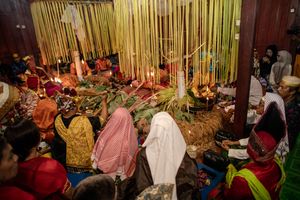
Today, the rivalry between Ternate and Tidore has transitioned from the battlefield to the realm of cultural pride and administrative competition. Ternate is a bustling urban center, its narrow streets crowded with motorbikes and its markets filled with goods from across Indonesia. In contrast, Tidore remains more tranquil, preserving a traditional atmosphere with its white-washed houses and meticulously kept gardens. The Sultan of Ternate and the Sultan of Tidore still exist as ceremonial figures, acting as guardians of tradition and mediators in local disputes.
The physical remnants of the spice wars are everywhere. Stone forts, some crumbling into the sea and others meticulously restored, dot the coastlines. Fort Tolukko and Fort Oranje in Ternate stand as silent witnesses to the centuries of blood spilled over a handful of seeds. The clove trees have returned to the hillsides, no longer a source of global conflict but a staple of the local economy and the primary ingredient in Indonesia's ubiquitous kretek cigarettes.
Walking through the Sultan's Palace in Ternate, one sees the blend of Dutch, Portuguese, and Islamic architectural styles. It is a building that embodies the layers of the island's history. The crown of the Sultan, said to have hair that grows and must be cut annually, remains one of the most sacred objects in the region. The legacy of the Sultanate of Ternate history is not just found in the history books of Europe, but in the resilient spirit of the people who live in the shadow of the volcanoes. They are the descendants of navigators and warriors who once made the most powerful kings of the West wait at their shores for a cargo of spice.
People Also Ask
What was the main cause of the rivalry between Ternate and Tidore?
The primary cause was the control of the global clove trade. As the only two islands where cloves grew naturally for centuries, both sultanates competed for dominance over the production, trade routes, and the loyalty of neighboring islands. This economic competition was further intensified by religious and political prestige within the North Maluku region.
How did the Sultanate of Ternate history impact the world?
The Sultanate of Ternate was the primary reason European powers like Portugal, Spain, and the Netherlands sent explorers across the globe. The search for Ternate’s cloves led to the first circumnavigation of the Earth and the eventual colonization of the Indonesian archipelago. The wealth generated from Ternate's spices helped fund the rise of the Dutch Golden Age.
Who was Sultan Baabullah and why is he famous?
Sultan Baabullah was the ruler of Ternate from 1570 to 1583. He is famous for successfully expelling the Portuguese from Ternate in 1575 after they murdered his father, Sultan Khairun. Under his rule, the Sultanate reached its territorial and political peak, controlling a vast area that stretched from the southern Philippines to the Papuan coast.
What are the Uli Lima and Uli Siwa?
These were two competing socio-political alliances in the Maluku Islands. Uli Lima, meaning "The Five," was led by the Sultanate of Ternate and included five primary regions. Uli Siwa, meaning "The Nine," was led by the Sultanate of Tidore and consisted of nine regional partners. These alliances organized the loyalties of smaller islands throughout the spice-producing region.
Can you visit the historical sites of the Sultanate of Ternate today?
Yes, many historical sites are accessible to visitors. In Ternate, you can visit the Sultan's Palace (Kedaton), Fort Tolukko, Fort Oranje, and Fort Kastela. In Tidore, the ruins of Spanish and Portuguese forts and the Tidore Sultanate Palace are open to the public. These sites offer a direct connection to the era of the spice trade.
Why did the Dutch destroy clove trees in Ternate and Tidore?
The Dutch East India Company (VOC) practiced a policy called extirpatie to maintain a global monopoly on cloves. By destroying trees in Ternate and Tidore and concentrating production in the Banda and Ambon islands, they could strictly control the supply and keep prices high in the European market.