The air in West Sumba carries the scent of dry grass and salt, a sharp contrast to the humid, jungle-heavy atmosphere of neighboring islands. Here, the landscape is defined by massive blocks of limestone, hand-carved into tombs that dwarf the living. This island, located between the volcanic peaks of Sumbawa and the rugged coast of Timor, offers a journey into a belief system that has survived centuries of external influence. For those planning a visit, this Sumba travel guide explores an island where the line between the physical and spiritual worlds is as thin as the edge of a ritual blade.
The Silent Sentinels of the Savanna
Across the rolling hills of the interior, the presence of the ancestors is tangible. In Sumba, the dead do not leave the family; they merely move into grander houses. These houses are the megalithic tombs, some weighing over ten tons, that sit at the center of every traditional village. Unlike the archaeological ruins found in Europe or South America, these megaliths are part of a living culture. New tombs are still being carved today, and the process of moving a single slab of limestone from a distant quarry to a village requires the collective effort of hundreds of men, fueled by the sacrifice of water buffalo and the rhythmic chanting of the clan.
Marapu culture dictates that the social standing of a family is reflected in the size and craftsmanship of these stone monuments. To walk through a village like Prai Ijing or Tarung is to navigate a forest of stone. Each tomb is etched with symbols: the horns of a buffalo representing wealth and strength, the image of a crocodile representing the keepers of the law, or the shapes of traditional jewelry. These stones are the focal point of daily life. Children play on them, women dry their laundry across the flatter slabs, and elders gather on the stone tiers to discuss village politics and marriage dowries. The stones are cold to the touch, but they pulse with the historical memory of the people who raised them.

Essential Logistics for a Sumba Travel Guide
Navigating Sumba requires a shift in tempo and expectations. The island is divided into two distinct administrative regions, West Sumba and East Sumba, each offering a different experience. Most travelers arrive at Tambolaka Airport in the west, which serves as the gateway to the most traditional villages and the primary sites for the Pasola festival. Alternatively, Waingapu in the east provides access to the world-renowned ikat weaving centers and the iconic dancing mangrove trees of Walakiri Beach.
Traveling between these points is an exercise in patience. While the main roads have improved, the terrain is rugged, and public transport is limited to crowded local buses known as travel. For a comprehensive Sumba travel guide experience, renting a car with a driver is the most practical option. Drivers often act as informal guides and translators, which is vital because many traditional villages require a formal greeting in the local language and the presentation of a small gift, usually betel nut or a modest donation, before entry. The best time to visit is during the dry season from May to October, though the Pasola festival occurs in February or March, depending on the lunar cycle.
The Architecture of the Spirit World
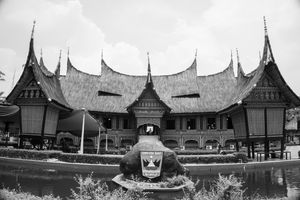
In the traditional villages of West Sumba, the houses are built to bridge the gap between the earth and the heavens. These structures, known as Uma Kelada, are characterized by their soaring, thatched roofs that peak in a central spire. This design is not merely aesthetic. The Sumbanese believe that the spirits of the ancestors reside in the highest point of the roof, looking down upon the living who occupy the central floor.
The Sky-High Roofs of the West
The construction of an Uma Kelada is a sacred event. Bamboo and wood are harvested according to lunar phases to ensure longevity and spiritual favor. The central area of the house is reserved for the hearth, the heart of the home, where smoke rises to the rafters, curing the thatch and preserving the structure against insects. The space beneath the floorboards is reserved for livestock, creating a vertical hierarchy: animals at the bottom, humans in the middle, and spirits at the top. This arrangement ensures that the ancestors are always part of the domestic conversation, hearing every argument and every celebration.
The Village Commons and Sacred Spaces
Every village is organized around a central plaza where the megaliths are clustered. This open space serves as a communal stage for rituals and the slaughter of animals. To enter a village like Ratenggaro, situated on the edge of a cliff overlooking the Indian Ocean, is to step into a space where the wind whistles through the tall grass and the sound of the surf provides a constant backbeat to the quiet work of the weavers. There is a sense of deliberate isolation here. The high roofs reach toward the clouds, acting as lightning rods for the divine in an otherwise horizontal landscape.

The Bloody Ritual of the Pasola
The most dramatic expression of Marapu culture is the Pasola, a ritual spear-fighting tournament on horseback. This is not a sport in the Western sense, but a fertility rite intended to spill blood onto the earth to ensure a bountiful harvest. The festival takes place in four different districts: Kodi and Lamboya are the most prominent. The exact Pasola festival dates are determined by the Rato, the high priests, who observe the moon and the arrival of a specific type of sea worm on the shoreline.
The Coming of the Nyale
Before the spears can fly, the Rato must find the nyale. These small, iridescent sea worms appear for only a few hours at dawn on specific beaches. The color and abundance of the nyale are read as omens for the coming year. If the worms are healthy and numerous, it signifies a year of prosperity. Once the worms are collected, the Rato signal that the Pasola can begin. The atmosphere shifts instantly from quiet anticipation to a fever pitch of excitement. Thousands of locals gather around a large open field, their horses decorated with bells and colorful ribbons.
The Clash of the Horsemen
The horsemen of Sumba are among the most skilled in the world, riding bareback at full gallop while throwing wooden spears at their opponents. The speed is terrifying. The sound of hooves thundering against the dry earth is punctuated by the rhythmic shouts of the crowd and the high-pitched ululations of the women. When a spear finds its mark and blood is drawn, the crowd erupts. To the Sumbanese, this blood is a gift to the spirits, a necessary payment for the life-giving rains that follow. Despite the intensity of the combat, there is a strict code of conduct. Grudges are not meant to be carried off the field; the Pasola is a collective sacrifice, not a personal vendetta.

The Sacred Rhythms of Marapu
While the Pasola is the most visible aspect of Marapu, the faith permeates every quiet moment of life on the island. Marapu is a belief in the balance between the human world and the invisible world of spirits and ancestors. Every tree, every stone, and every stream has a guardian. When a new house is built, or a child is born, the Rato must be consulted to ensure that the proper rituals are performed. This is a culture of reciprocity. One gives to the spirits so that the spirits will provide protection and guidance.
Understanding Marapu culture is essential for anyone using a Sumba travel guide to explore the island. It explains why a villager might be hesitant to let you photograph a certain stone, or why a specific area of the forest is considered taboo. It is a world of signs and omens. The flight of a bird or the pattern of a pig's liver can determine the timing of a wedding or the location of a new tomb. This deep connection to the spiritual realm gives the Sumbanese a sense of place and identity that remains remarkably unshaken by the modern world.
The Art of Living Ikat
In East Sumba, the cultural expression shifts from the stone and the spear to the loom. Sumbanese ikat is world-famous for its complexity and the depth of its natural dyes. These textiles are not merely clothing; they are currency, dowry items, and funeral shrouds. A single piece of high-quality ikat can take over a year to complete, as the threads are tied and dyed multiple times to create intricate patterns of animals, humans, and mythological creatures.
In villages like Kanatang or Praiyawang, the sound of the beating loom is the soundtrack of the afternoon. Women sit on the porches of their houses, working with indigo and morinda bark to produce deep blues and rusty reds. Each motif tells a story. The skull tree (andung) reminds the viewer of the island's headhunting past, while the butterfly signifies transformation. To purchase a piece of ikat here is to take home a piece of the island's soul, a woven record of the Marapu cosmology that has been passed down through generations of women.
A journey to Sumba is a reminder that the world still holds places where the ancient and the modern exist in a delicate, beautiful tension. It is an island that demands respect and offers, in return, a glimpse into a way of life that values the continuity of the spirit over the transience of the material. As the dust settles on the Pasola field and the sun dips below the horizon, the megaliths remain, silent and enduring, guarding the secrets of the Land of Marapu.