
Tangkoko National Park serves as one of the last strongholds for the unique wildlife of the Minahasa Peninsula in North Sulawesi, Indonesia. This protected area is essential for the survival of the spectral tarsier and the Celebes crested macaque. As the equatorial sun dips below the volcanic horizon, the canopy of the Batuangus Mountain begins to vibrate with a frantic, rhythmic chatter. The air grows thick with the scent of damp earth and rotting fruit, signaling the shift from the diurnal reign of the monkeys to the nocturnal emergence of the spirits.
The Evolution of the Minahasa Wilderness
The landscape of the Tangkoko-Batuangus Nature Reserve is a product of violent geological history. Located at the northern tip of Sulawesi, the park encompasses approximately 8,700 hectares of diverse terrain, ranging from coastal beaches with black volcanic sand to the jagged peaks of Mount Tangkoko and Mount Dua Saudara. This region sits east of the Wallace Line, a faunal boundary that separates the ecozones of Asia and Wallacea. Because Sulawesi has been isolated from the continental shelves for millions of years, the evolution of its species has followed a distinct and often strange path.
Walking through the forest, the ground feels soft underfoot, cushioned by layers of decaying leaves and volcanic ash. The trees here are giants, particularly the strangler figs (Ficus) that serve as the primary architecture of the jungle. Their roots descend like frozen waterfalls, wrapping around host trees and creating hollow chambers that provide sanctuary for countless organisms. The humidity is a constant presence, clinging to the skin and intensifying the earthy aromas of the undergrowth.
Endemism is the defining characteristic of this ecosystem. In biological terms, endemism refers to the state of a species being found in a single defined geographic location and nowhere else. Sulawesi boasts some of the highest rates of endemism in the world. Visitors to the park are not merely looking for animals; they are looking for biological anomalies that exist only on this K-shaped island. The lack of large mammalian predators has allowed for the development of social structures and physical traits that are entirely unique to the North Sulawesi forests.

Social Hierarchies of the Tangkoko National Park Macaques
The Celebes crested macaque (Macaca nigra), known locally as the yaki, is perhaps the most visible resident of the park. These primates are entirely black, from their expressive faces to their dense fur, save for the striking amber color of their eyes. Unlike many other macaque species that spend a significant amount of time in the trees, the yaki are largely terrestrial. They move across the forest floor in large, coordinated troops that can number over a hundred individuals.
Observing a troop of yaki reveals a complex social world. High-ranking males lead the procession, their presence signaled by a confident stride and occasional vocalizations to maintain order. The social glue of the group is grooming. In small clearings or on the lower branches of fallen trees, pairs of macaques sit for hours, meticulously picking through each other's fur. This behavior is not just about hygiene; it is a mechanism for conflict resolution and the reinforcement of social bonds. Juveniles are the most energetic, tumbling through the ferns and chasing one another with a reckless abandon that often requires the intervention of a stern adult.
These macaques have gained international fame for their intelligence and curiosity. They are known to approach humans with a calm, inquisitive gaze, though the park rangers strictly enforce rules against feeding or touching them. Their diet is primarily frugivorous, consisting of over 145 different types of fruit found within the reserve. When fruit is scarce, they supplement their intake with young leaves, insects, and occasionally small lizards. The sight of a hundred black monkeys moving silently through the dappled light of the forest floor is a scene that feels prehistoric, a remnant of a world before the expansion of human infrastructure.
| Species | Scientific Name | Activity Pattern | Primary Diet |
|---|---|---|---|
| Spectral Tarsier | Tarsius spectrum | Nocturnal | Insects, small vertebrates |
| Celebes Crested Macaque | Macaca nigra | Diurnal | Fruit, leaves, insects |
| Sulawesi Bear Cuscus | Ailurops ursinus | Diurnal/Crepuscular | Leaves, unripe fruit |
| Knobbed Hornbill | Rhyticeros cassidix | Diurnal | Ficus fruits, drupes |

The Nocturnal Hunt of the Spectral Tarsier
As the light fades and the yaki retreat to their sleeping sites high in the canopy, a different creature awakens. The spectral tarsier (Tarsius spectrum) is often described as the inspiration for the modern depiction of woodland spirits. Measuring only about 10 to 15 centimeters in length, excluding the tail, they are among the smallest primates on Earth. Their most defining feature is their eyes, which are larger than their brains. These massive orbs are fixed in their sockets, requiring the tarsier to rotate its head 180 degrees in either direction to scan its surroundings.
The search for tarsiers usually begins at the base of large, hollow fig trees. These trees act as communal dens where families of tarsiers sleep during the day. As twilight takes hold, the first signs of movement are the twitching of oversized, membranous ears. Tarsiers possess an acute sense of hearing, allowing them to detect the faint rustle of an insect's wings or the movement of a cricket in the leaf litter. One by one, they emerge from the shadows of the tree roots, clinging to vertical saplings with long, slender fingers tipped with adhesive pads.
Their movement is explosive. Tarsiers are vertical clingers and leapers, capable of jumping distances of over three meters between branches. They do not climb so much as they teleport through the understory. In the beam of a ranger's dampened flashlight, their eyes glow with a piercing intensity. Unlike other primates, tarsiers are entirely carnivorous. They hunt with surgical precision, pouncing on grasshoppers, moths, and even small birds, killing them with a swift bite before returning to a vertical perch to consume their prey. The forest at night belongs to these tiny, wide-eyed predators, whose high-pitched whistles punctuate the darkness.
Canopy Dwellers: Hornbills and Bear Cuscus
While the forest floor and the mid-levels of the jungle are occupied by macaques and tarsiers, the upper reaches of Tangkoko National Park belong to the giants of the air and the slow-moving marsupials of the East. The knobbed hornbill is the undisputed king of the Sulawesi canopy. These birds are massive, with wingspans that create a rhythmic, rushing sound similar to a steam locomotive as they fly overhead. The males are particularly striking, possessing a large, red casque atop their yellow bills and a vivid blue throat pouch.
Hornbills play a vital role in the health of the forest as seed dispersers. They travel long distances in search of fruiting trees, and their presence is often announced by their loud, repetitive honking calls. During the nesting season, the female seals herself inside a tree cavity using a paste made of mud and fruit pulp, leaving only a small slit through which the male provides food. This extraordinary level of parental investment ensures the survival of the chicks in a forest filled with potential predators like the reticulated python.
Sharing the high branches is the Sulawesi bear cuscus. Though it looks like a small bear or a sloth, the cuscus is actually a marsupial. It moves with a deliberate, slow-motion grace, using its prehensile tail as a fifth limb to navigate the swaying branches. Because its diet consists largely of low-energy leaves, the bear cuscus spends much of its day resting, its thick, grey-brown fur providing excellent camouflage against the bark. It is one of the few marsupials found this far west, a biological gift from the Australian continent that drifted toward Sulawesi millions of years ago.

Tangkoko National Park: Logistics and Conservation
Reaching this remote corner of North Sulawesi requires a journey to the city of Manado, the provincial capital. From Manado, the drive to the village of Batu Putih, which sits at the entrance of the park, takes approximately two to three hours. The road winds through lush coconut plantations and small highland villages where cloves are laid out on tarpaulins to dry in the sun. The scent of cloves, spicy and sweet, often lingers in the air long before the park boundaries are reached.
Batu Putih is a quiet coastal community where the rhythm of life is dictated by the sea and the forest. Most visitors stay in local homestays, which offer a window into Minahasan hospitality. These accommodations are simple but provide the necessary proximity for early morning and late-evening treks. Engaging a local guide is mandatory for entering the park. These guides are often from the local village and possess an encyclopedic knowledge of the forest. They can track a troop of macaques by the sound of a breaking branch or locate a tarsier den based on the faint scent of musk.
- Timing the Visit: The best time to visit is during the dry season, from June to October, when the forest trails are more manageable.
- Essential Gear: Long trousers and high socks are necessary to protect against terrestrial leeches and mites. A headlamp with a red-light mode is preferred for tarsier viewing to avoid distressing the animals.
- Physical Requirements: The terrain is generally flat near the coast but becomes steep and rugged as one moves inland. A moderate level of fitness is required for the longer treks toward the volcanic craters.
- Respecting the Wildlife: Maintaining a distance of at least five meters from the macaques ensures that their natural behavior is not disrupted.
Conservation remains a critical challenge for the park. Despite its protected status, the Celebes crested macaque faces threats from habitat loss and illegal hunting. Local organizations and international researchers work alongside the community of Batu Putih to promote eco-tourism as a sustainable alternative to traditional hunting. By visiting the park and supporting local guides, travelers contribute directly to the economic value of a standing forest, ensuring that the spectral tarsier and the black macaque have a future in the volcanic wilds of Sulawesi.
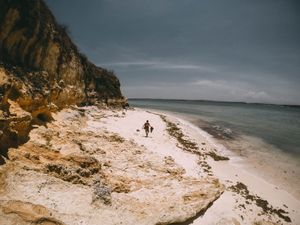
As the trek concludes and one emerges from the dense canopy onto the black sands of the Batu Putih beach, the scale of the ecosystem becomes clear. The waves of the Celebes Sea lap against the shore, and the silhouettes of the Dua Saudara mountains loom in the distance. This is a place where the ancient processes of evolution remain visible, a living laboratory where the spirits of the forest continue to thrive in the shadows of the fig trees.
People Also Ask
What is the best time of day to see the spectral tarsier?
The spectral tarsier is strictly nocturnal, so the best time to see them is at dusk, usually between 5:00 PM and 6:30 PM, as they emerge from their sleeping trees. They can also be seen in the early morning hours just before sunrise as they return to their dens.
Do I need a permit to enter Tangkoko National Park?
Yes, an entrance permit is required. This can be purchased at the park headquarters in Batu Putih. The fee typically includes the park entry and a contribution to conservation efforts. You must also hire a licensed local guide at the office.
Is it possible to see the macaques on every trek?
While wildlife sightings are never guaranteed, the yaki are very active and have large territories. Local guides are highly skilled at tracking the troops, and most visitors who spend at least one full day in the park have a high probability of encountering them.
What should I wear for a trek in Tangkoko?
Lightweight, breathable clothing is essential due to the high humidity. Long sleeves and long trousers are recommended to protect against insects and thorny plants. Sturdy walking shoes or hiking boots with good grip are necessary for the forest trails.
How do I get to Tangkoko from Manado?
The most convenient way is to hire a private car and driver from Manado or the airport. Alternatively, public transport (mikrolets) is available but requires multiple transfers and significantly more time. Many homestays in Batu Putih can arrange transfers for their guests.
Are there dangerous animals in the park?
The park is home to reticulated pythons and various insects, but they rarely pose a threat to visitors who stay on the trails and follow their guide's instructions. The macaques are wild animals and should be treated with respect, but they are generally not aggressive unless provoked.