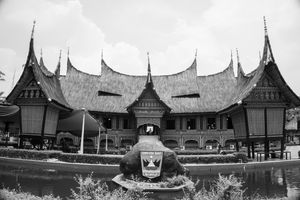
Trunyan village Bali sits on the eastern shore of Lake Batur, shadowed by the steep volcanic walls of the Kintamani caldera. This isolated community preserves customs that predate the 14th-century arrival of the Majapahit Empire, maintaining a lineage known as the Bali Aga, or the Original Balinese. Unlike the vivid, fire-driven cremations common across the rest of the island, the residents of Trunyan village Bali practice an open-air burial ritual known as Mepasah. Here, the deceased are laid to rest under bamboo cages, exposed to the elements, yet the air remains remarkably clear of the expected odors of decay.
The silence of the cemetery is heavy, broken only by the lap of lake water against the limestone shore and the rustle of leaves from a massive, ancient tree. This tree, the Taru Menyan, is the biological and spiritual anchor of the village. It possesses a unique resinous quality that neutralizes the scent of organic decomposition, a phenomenon that has drawn observers for centuries. To the Bali Aga, this is not merely a botanical curiosity but a divine gift that allows them to keep their ancestors close without the intervention of fire or earth.

The Bali Aga: Guardians of Pre-Hindu Tradition
The identity of the people in Trunyan village Bali is defined by their resistance to outside influence. While the majority of Bali adopted the refined courtly traditions of the Majapahit refugees centuries ago, the Bali Aga retreated to the mountains and deep valleys. They maintained a social structure and a dialect that remains distinct from the rest of the island. Their laws, known as awig-awig, are unwritten but strictly followed, governing everything from land use to the complex protocols of death.
In Trunyan, the concept of the afterlife is less about the immediate release of the soul through fire and more about a slow, natural transition back into the elements. The village itself is structured around the worship of Ratu Gede Pancering Jagat, a powerful deity believed to be the first inhabitant of the area. This connection to the land is absolute. The people do not see themselves as owners of the territory but as stewards of a sacred landscape that includes the active volcano of Mount Batur and the deep, cold waters of the lake.
This stewardship extends to the preservation of their crafts. The bamboo work in Trunyan is particularly specialized, used to create the intricate cages that protect the bodies of the deceased. These cages, called ancak saji, are woven from split bamboo in a pattern that allows air to circulate while protecting the remains from scavenging animals. The craftsmanship is a silent tribute to the dead, a functional piece of art that facilitates the body’s return to the atmosphere.
The Science and Myth of the Taru Menyan Tree
The name Trunyan is derived from the words Taru, meaning tree, and Menyan, meaning fragrant. Local legend tells of a goddess who was drawn to the earth by a scent so intoxicating that it distracted the gods. To mask this scent and prevent further celestial disruption, the local ruler ordered that the dead be placed beneath the tree, using the fragrance to cover the smell of mortality. This myth reflects a profound understanding of the local ecology.
Botanically, the Taru Menyan is a species of sandalwood or a related fragrant species that thrives in the specific microclimate of the Batur caldera. The tree is estimated to be over a thousand years old, its trunk gnarled and wide, its roots gripping the volcanic soil like iron claws. The resin produced by the tree is exceptionally potent. As a body undergoes the natural process of decomposition, the volatile organic compounds released are absorbed or neutralized by the tree’s aromatic output.
Visitors often expect a charnel house atmosphere, but the reality is a scent of damp earth and old wood. The tree acts as a natural lungs for the cemetery, breathing out a sweet, heavy perfume that mingles with the mountain mist. It is a biological miracle that has allowed the Bali Aga to maintain their Mepasah tradition for generations without the health risks or unpleasantness typically associated with open-air burials.

The Ancestral Customs of Trunyan Village Bali
The ritual of Mepasah is a meticulous process that begins the moment a villager passes away. In Trunyan village Bali, the treatment of the body is governed by the status of the individual and the nature of their death. Only those who were married and died of natural causes are permitted to be laid beneath the Taru Menyan. This distinction is vital to the community’s spiritual balance.
The Preparation of the Deceased
- The body is washed with water from the sacred Lake Batur, often infused with local flowers.
- It is wrapped in a simple white cloth, leaving the face exposed initially for family members to say their final goodbyes.
- A small ceremony is held at the family home, where offerings of fruit, rice, and incense are made to ensure the soul’s safe passage.
- The body is transported by boat across the lake to the cemetery, as there is no land path to the sacred burial ground.
- Upon arrival, the body is placed on the ground inside a newly woven ancak saji cage.
Once the cage is placed, the physical body is left to the stewardship of the Taru Menyan. When a new body arrives and the eleven available spots under the tree are full, the remains of the longest-tenured occupant are moved to a stone altar nearby. The skull is added to a growing row of ancestors, while the bones are respectfully piled to make room for the newcomer. This cycle ensures that the cemetery remains a living, functioning space rather than a static monument.
A Hierarchy in the Afterlife: The Three Sacred Grounds
Death in Trunyan is not a democratic affair. The village utilizes three distinct burial sites, each serving a specific category of the deceased. This classification system reflects the Bali Aga’s belief in the purity of the soul and the circumstances of one’s departure from the physical world.
| Cemetery Name | Intended For | Burial Method |
|---|---|---|
| Sema Wayah | Married adults who died of natural causes | Mepasah (Open-air under the tree) |
| Sema Muda | Children and unmarried adults | Mepasah (Separate area) |
| Sema Bantas | Victims of accidents, suicide, or disease | Earth burial (Interred in the ground) |
Sema Bantas is considered a place of "unclean" death. Those who die suddenly or violently are thought to possess a spirit that is not yet ready for the fragrant transition of the Taru Menyan. By burying them in the earth, the community contains the potential spiritual turbulence associated with an untimely end. This distinction highlights the importance of a "good death" in Bali Aga culture, where a long life and a natural passing are seen as the ultimate fulfillment of one's earthly duty.

The Presence of the Ratu Gede Pancering Jagat
At the center of Trunyan village Bali stands the Pura Pancering Jagat, the temple of the "Great King who is the Pivot of the World." Inside this temple resides a four-meter-tall statue of the same name, a megalithic figure that is rarely shown to outsiders. The statue is ancient, carved from a single block of stone, and is believed to have grown out of the ground. It represents the ultimate authority in Trunyan, a deity that oversees the fertility of the land and the conduct of its people.
During the village’s annual festival, the Barong Brutuk, young men undergo a period of purification before donning masks made of dried banana leaves. They perform a ritual dance that is raw and primal, far removed from the polished aesthetics of the Legong or Barong dances found in Ubud. The performers carry long whips, which they use to playfully strike spectators, a gesture believed to bestow blessings and health. This ceremony reinforces the connection between the living, the dead, and the divine power that resides in the soil and the lake.
The relationship between the villagers and the Ratu Gede is one of deep respect and occasional fear. The deity is thought to be the guardian of the Taru Menyan’s fragrance. If the people stray from their traditions or neglect their duties to the ancestors, it is believed the tree will lose its scent, and the village will be consumed by the reality of decay. This belief system creates a powerful incentive to preserve the old ways, even as the world around the Batur caldera continues to modernize.
A Final Reflection on the Fragrance of Time
Trunyan village Bali offers a perspective on mortality that is both confronting and deeply peaceful. In the shadow of the Taru Menyan, death is stripped of its clinical distance and its fiery finality. It is instead a slow, fragrant dissolution, a return to the atmosphere that sustained the living. The row of skulls, mossy and weathered by the mountain air, does not serve as a macabre display but as a testament to a community that refuses to forget its origins.
As the sun sets behind the rim of the volcano, casting long shadows over Lake Batur, the fragrance of the tree seems to intensify. It is a reminder that in this corner of the archipelago, the past is not buried or burned away. It remains on the surface, protected by bamboo and sweetened by the breath of an ancient tree, interwoven with the lives of those who still call the caldera home.
People Also Ask
Why does the Trunyan cemetery not smell like decomposition?
The primary reason is the Taru Menyan tree, a large fragrant species that produces a potent natural resin. This aroma neutralizes the odors of organic decay. Additionally, the open-air bamboo cages allow for rapid dehydration and aeration of the remains.
Can anyone be buried under the Taru Menyan tree?
No, only members of the Trunyan village Bali community who were married at the time of death and died of natural causes are permitted. Unmarried individuals, children, and those who died in accidents are relegated to different burial grounds.
What happens when the eleven burial spots are full?
When a new body needs to be placed, the remains of the person who has been there the longest are moved. The skull is placed on a stone altar with other ancestors, and the bones are moved to a communal pile to make room for the new arrival.
Is Trunyan village Bali part of the Majapahit lineage?
No, the residents of Trunyan are Bali Aga, meaning they are the indigenous Balinese who lived on the island before the 14th-century arrival of the Majapahit Empire from Java. Their customs, language, and social structures are distinct from the majority of Bali.
What is the significance of the ancak saji bamboo cages?
The ancak saji are woven bamboo structures that protect the deceased from animals while allowing the body to be exposed to the elements and the fragrance of the Taru Menyan. They are a signature craft of the Trunyan people.
Is the Mepasah ritual considered a form of cremation?
No, Mepasah is an open-air burial. While most Balinese Hindus practice Ngaben (cremation) to release the soul through fire, the Bali Aga of Trunyan believe in a natural transition facilitated by the sacred tree and the environment.